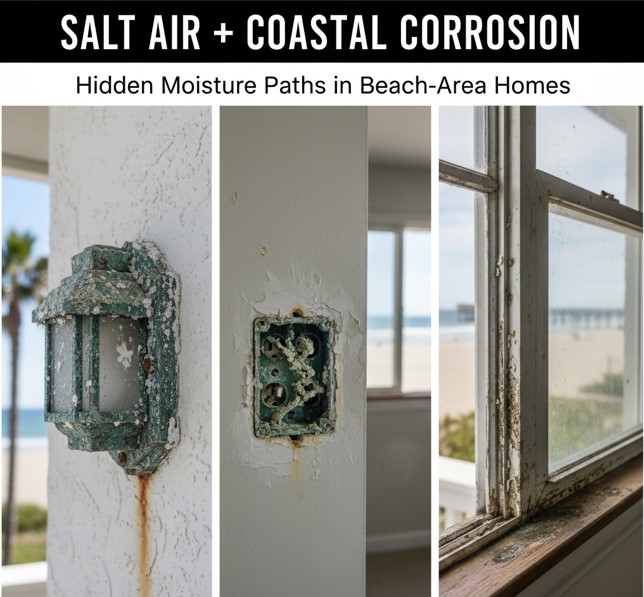
Living in San Diego is a dream for so many reasons—mild winters, endless sunshine, and that unbeatable ocean breeze. But if you own or rent a home anywhere near the coast, you probably already know that San Diego’s beauty comes with some unique challenges. The same marine layer that brings us those moody “June Gloom” mornings also delivers salt and moisture right to our doors (and windows, and vents). Over time, this invisible duo can sneak into hidden corners of our homes, quietly setting the stage for leaks, corrosion, and even mold. The good news? With a little know-how, you can outsmart these risks—no matter if you’re in a classic PB bungalow, a La Jolla condo, or a rental a bit further inland.
How Salt Air and Coastal Conditions Create Hidden Moisture Risks
San Diego’s coastal climate is a double-edged sword: while the ocean keeps our temperatures pleasant, it also bathes homes in salt-laden air and persistent moisture. Every marine layer or foggy morning coats surfaces with microscopic droplets that you might not even notice. I’ve run my finger along an exterior vent after a week of June Gloom and come away with a gritty, salty film—proof that the ocean’s reach is real.
That salt doesn’t just make things sticky. It accelerates corrosion, especially on metal fasteners, window frames, HVAC components, and even kitchen appliances near open windows. Over time, this corrosion can create pinholes, loose seals, or warped surfaces where water—and more salt—can get in. Older homes are particularly vulnerable, with original windows, aging weatherstripping, and outdated venting that weren’t designed for today’s coastal climate. Even newer condos and apartments aren’t immune, since stacked plumbing and rooftop HVAC units can hide leaks in shared walls or ceilings.
Inland homes may not battle the same salt air, but that doesn’t mean they’re off the hook. During summer, these homes often face condensation from cranked-up AC, which can pool in attics, closets, or behind walls if not managed.
Today’s Check: Take a minute to wipe a finger along an exterior window frame or vent. If you feel grit or spot early rust, that’s salt—and a sign it’s time to step up your corrosion and moisture control game.
Top Hidden Moisture Paths: Where Leaks and Dampness Lurk
In my experience, the most damaging moisture issues are the ones you can’t see right away. Attics under low-slope roofs, crawl spaces, and the spots behind shower walls (especially in older beach homes) are all classic hiding places. Even newer condos, with their stacked plumbing and rooftop mechanical rooms, can develop “mystery” stains or musty odors if a leak goes unchecked.
Window and stucco leaks can be especially hard to spot. I’ve seen foggy mornings leave beads of condensation on window sills, only to have that moisture seep behind cracked seals. Under-sink leaks, toilet supply line drips, or a shower valve leak behind the wall can go unnoticed until you spot warped wood or bubbling paint.
The trick is to catch these issues early—before mold or structural damage sets in. That’s where a few simple tools come in handy. A digital hygrometer can show you if your indoor humidity ever creeps above 55%, while a moisture meter can help you spot dampness behind drywall or in baseboards. I keep a flashlight and a small inspection mirror under my sink for monthly checks and log anything suspicious in a notebook.
10-Minute Moisture Hunt: Today, take a quick walk around your home. Check under every sink, inspect window sills for dampness or soft wood, and peek inside your HVAC closet for rust or condensation. If you’re in a condo or apartment, don’t ignore ceiling stains, musty odors, or “ghosting” on walls—these can all be signs of hidden leaks from above or next door.
What to Do in the First 0–48 Hours After a Leak or Water Intrusion
If you discover a leak, roof drip, or big patch of condensation, the clock is ticking. The EPA is clear: drying water-damaged areas within 24–48 hours is critical to reduce mold risk. Here’s how I handle these situations:
0–24 hours: First, stop the water at its source—this might mean shutting off the main valve or closing an appliance line. Blot or vacuum up standing water, and open windows or doors if the weather isn’t too humid outside. Set up fans or a dehumidifier (if you have one), aiming for indoor humidity below 55%. If you’re seeing a leak from outside—say, roof or window—contain the spread with towels and move valuables out of the way.
24–48 hours: Remove any damp materials like rugs, towels, or cardboard boxes. Now is the time to check hidden spots, like adjoining rooms or closets, for signs of dampness. Take photos of the affected areas and damaged items—these help with insurance, landlord documentation, or future repairs. Measure indoor humidity in the affected area and keep an eye out for any new wet spots.
If you see visible mold larger than a dinner plate (about 10 square feet), suspect sewage, or can’t find the leak source, it’s time to call a pro. And if you’re renting or in a condo, notify your landlord or HOA immediately—document everything with photos and written notices.
Emergency Action: Found a wet patch? Dry it as much as possible within the first 24 hours, then check every 6 hours for new moisture. If you’re seeing humidity stay above 60% even after drying, you may have a hidden leak or a ventilation problem.
Ventilation Upgrades to Beat Condensation and Coastal Damp
Proper ventilation is one of the simplest ways to keep moisture—and mold—at bay, especially in coastal San Diego homes where marine layer condensation is a regular guest. I learned the hard way that a weak bathroom fan just doesn’t cut it when you’re dealing with salty fog and daily showers. Upgrading to a bath fan with a timer and higher CFM (cubic feet per minute) can make a huge difference. If the fan can’t clear steamy mirrors in 10 minutes, it’s time to consider a more powerful model.
For kitchens, ducted range hoods are far superior to recirculating ones, especially in fog-heavy neighborhoods where humidity has nowhere to escape. Dryer vents should be cleaned annually, since lint can trap moisture and lead to hidden buildup.
Attics and crawl spaces in older homes near the beach often lack adequate venting. A quick check for corrosion or dampness around vent covers can tell you if those areas are struggling. In condos or apartments, I recommend using window fans or a portable dehumidifier, and requesting regular HVAC maintenance from building management.
Today’s Test: After your next shower, run the bath fan and use your hygrometer to check humidity. If it stays above 60% after 15 minutes, it’s time to upgrade your fan or look into additional ventilation. Don’t forget—never vent bathroom or dryer exhaust into the attic; always direct it outside.
Mold Prevention Starts With Moisture Control: A San Diego Checklist
From Pacific Beach to Poway, the key lesson I’ve learned is this: Mold is just a symptom. The real enemy is uncontrolled moisture. Whether it’s a slow under-sink leak, condensation on windows from the marine layer, or a sweating AC duct in the summer, water comes first—mold follows if you don’t act fast.
I keep a moisture meter handy for suspicious spots like the attic, crawlspace, and under sinks. Regular inspections matter most after heavy fog, rain, or a heatwave when humidity spikes. For rentals or condos, monthly checks and diligent documentation can save a lot of hassle down the line.
When to DIY? If the leak is small, isolated, and from clean water, you can usually handle cleanup with detergent and water—just wear gloves and an N95 mask if you see any mold. For anything larger than 10 square feet, repeated leaks, or if you suspect sewage or can’t access the affected area, it’s time to call a pro. Always document the process for your landlord or insurance.
San Diego Homeowner Task: Start tracking your indoor humidity for the next 7 days. Log the highs and lows, and pay attention to when they spike—after showers, during foggy mornings, or when the AC is running hard. This simple habit can reveal hidden trouble spots before they become major repairs.
FAQ: Your Coastal Corrosion and Moisture Control Questions Answered
How does salt air cause hidden leaks in coastal homes?
Salt air deposits microscopic moisture and salt crystals on surfaces, leading to corrosion. Over time, this weakens seals and metal fasteners, creating new paths for water to seep in—often hidden behind walls or under floors.
What are the first signs of moisture damage in beach-area houses?
Look for bubbling paint, soft or warped wood, rusty fasteners, musty odors, or “ghosting” stains on ceilings and walls.
How do I know if my HVAC is spreading moisture?
Check for sweating AC ducts, visible condensation, or musty smells near vents. A clogged condensate line can back up water, so regular HVAC maintenance is key.
Should I use a dehumidifier near the coast in San Diego?
Yes, especially if your indoor humidity stays above 55%. Dehumidifiers help keep humidity in the ideal 30–50% range, reducing mold risk.
What’s the best way to dry out a crawl space after a coastal storm?
Remove standing water with a wet/dry vac, set up fans or a dehumidifier, and check for hidden dampness with a moisture meter. Dry within 24–48 hours for best results.
When should I call a pro for moisture or mold issues?
If you see mold patches larger than 10 square feet, ongoing leaks, sewage, or can’t find the leak source, call a licensed mold inspector or remediation specialist.
How can renters protect themselves from hidden moisture in apartments?
Regularly inspect plumbing, window sills, and HVAC closets. Document any issues with photos and notify your landlord immediately in writing.
What tools help find hidden moisture in homes?
A digital hygrometer, moisture meter, flashlight, inspection mirror, and a simple notebook for tracking all help you catch problems early.
For more practical tips, see Moisture Control Guide: Preventing Mold in San Diego Homes and Leak Detection: First 48 Hours Action Plan for San Diego Homeowners.
Next Steps:
Do a 10-minute hidden moisture checklist in your home today. Track your indoor humidity for 7 days and spot problem areas. If you find leaks or corrosion, document them with photos and schedule a pro inspection if you see red flags. A little vigilance now can save you a lot of trouble—and expense—down the line.