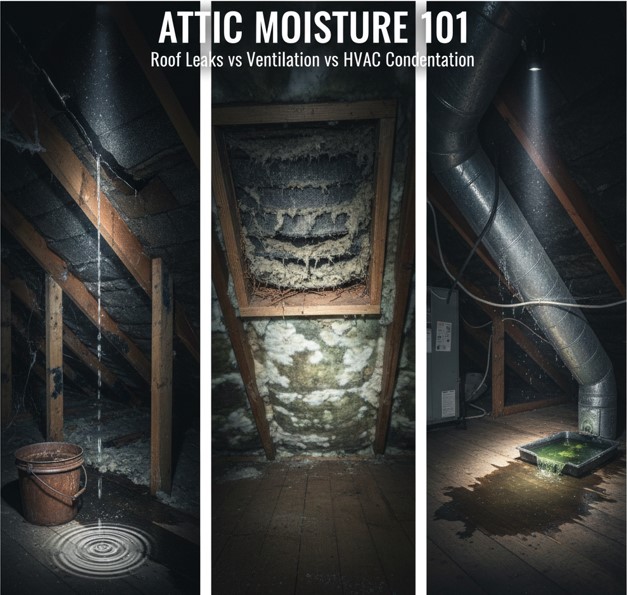
San Diego’s unique climate—ranging from coastal fog and marine layers to hot, dry inland days—makes attic moisture a tricky and often hidden problem for homeowners, renters, and property managers alike. Whether you’re in an older beach bungalow, a new inland build, or a busy apartment complex, unchecked attic moisture is the leading cause of mold and costly repairs. This guide breaks down the root causes—roof leaks, poor ventilation, and HVAC condensation—so you can spot problems early, fix them fast, and keep your home dry and healthy.
Roof Leaks – The Classic Culprit
When it comes to sudden, unexpected attic moisture, roof leaks top the list—especially after a rare San Diego rainstorm or heavy coastal fog rolling in. Even small leaks can let water creep in around aging Spanish tiles, cracked shingles, or wind-blown rain that sneaks under flashing. If you live near the coast, marine layer humidity and “June Gloom” drizzle can also find their way in, often going unnoticed until you spot the aftermath.
Inside your attic, roof leaks reveal themselves in several ways: stained or soggy insulation, damp rafters, rusty nails, or even puddles pooling on the attic floor. These signs often cluster around chimneys, skylights, vent pipes, and anywhere flashing or sealant has worn away—a common scenario in older San Diego homes and condos.
If you suspect a roof leak, don’t wait. Here’s a simple 0–24–48 hour action plan:
Immediately (0 hours):
Stop more water from getting in however you can. Place buckets or towels under drips. If water is near electrical fixtures, turn off power to that area for safety.
Within 24 hours:
Remove any wet insulation or boxes. Set up fans or a dehumidifier (aim for 30–50% indoor humidity) to start drying the space. This window is crucial—mold can get going in just 24–48 hours.
By 48 hours:
Use a moisture meter to check for hidden wet spots in wood or insulation. Take photos of any damage; you’ll need these for insurance documentation or to report to your landlord or HOA. If you rent, always notify your property manager right away.
Want to spot leaks faster? After any rain, grab a flashlight and check the attic perimeter, especially near vents and roof edges. Look for fresh stains, musty smells, or water trails. A quick inspection now can save you thousands later.
If the leak is small, accessible, and you feel confident, you might patch it yourself. For bigger leaks, visible mold, or anything involving structural repair, call a pro—especially if you’re dealing with a shared roof in a condo or HOA property.
Attic Ventilation – Balancing Airflow to Prevent Moisture Build-Up
Poor attic ventilation is the silent trap that lets moisture linger and build up—especially during San Diego’s infamous marine layer or “June Gloom” stretches. Coastal communities see more foggy mornings, while inland homes may struggle with trapped heat and humidity during summer. When attics can’t breathe, humidity rises, and even the smallest amount of trapped moisture can set the stage for mold.
Blocked soffit vents, inadequate ridge vents, or insulation that’s been pushed over vent openings prevent proper airflow. The signs are subtle at first: condensation on nails, rusty hardware, mold patches on rafters, or just a stale, musty odor that lingers even on dry days.
Proper venting—whether through ridge, soffit, gable, or powered attic fans—lets humid air escape and keeps your attic dry. Here’s how to check if your attic needs ventilation help:
Red flags:
You see beads of water or frost on rafters (even mild San Diego winters can do this), visible mold on wood, or that persistent “attic funk” that never quite goes away.
Do this now:
Check all soffit and ridge vents for blockages. Use a small mirror or a phone camera to look inside vent channels. Clear out any insulation or debris. If you’re in a condo or rental, ask your property manager about shared venting or recent insulation work.
Cleaning and minor fixes like adding vent baffles or screens are great DIY projects. But if you see mold patches over 10 square feet (about the size of a bath towel), or if the attic feels swampy even with vents open, it’s time to call a professional for a full assessment.
HVAC Condensation – The Hidden Attic Threat
You might not expect your air conditioning to cause attic moisture, but in San Diego’s mixed climate, HVAC systems are a major culprit—especially in summer when fog and heat collide. Here’s what happens: when cold AC ducts run through a warm, humid attic, condensation forms on the outside, just like a cold soda can on a summer day. If those ducts aren’t properly insulated, or if your HVAC condensate line clogs, water drips onto insulation and wood, staying hidden until you spot a stain or musty smell.
Tell-tale signs of HVAC condensation include water stains under ducts, drips on insulation, or unexplained “mystery moisture” with no visible roof leak. Sometimes, you’ll notice higher indoor humidity or sweating AC ducts during coastal fog events or heavy AC use inland.
Prevention starts with regular HVAC maintenance—cleaning condensate lines, checking for duct leaks, and making sure all attic ductwork is well-insulated. Remember, keeping your home’s overall humidity between 30–50% (and always below 60%) helps minimize condensation risks.
Do this now:
After running your AC for an hour, grab a flashlight and inspect attic ducts for sweating, drips, or wet spots on insulation. If you spot uninsulated or poorly wrapped ducts, add insulation sleeves—available at most hardware stores. Keep a hygrometer in the attic to track humidity, and clean your AC drain line at least once a year.
If you find persistent dampness, visible mold, or suspect a clogged condensate line you can’t clear, it’s smart to call a licensed HVAC tech for a full checkup.
Fast Response: 0–24–48 Hour Action Plan for Attic Moisture
When you find attic moisture, time is your best friend. Mold can start growing in as little as 24 hours, so fast action is essential for every San Diego homeowner or renter. Here’s your rapid response plan—especially important after storms, leaks, or discovering condensation:
Immediately (0 hours):
Find and stop the water source—whether it’s a roof leak, HVAC drip, or condensation. Document the damage with photos (including close-ups and wide shots). If water is near electrical components, shut off the circuit breaker to that area—safety first.
Within 24 hours:
Remove any wet items, including insulation, boxes, or storage bins. Open attic access or vents to maximize airflow. Set up fans or a dehumidifier (keep humidity in the 30–50% range). For condos or rentals, notify your property manager or landlord right away, and keep documentation for insurance or rental records.
By 48 hours:
Use a moisture meter to scan wood framing and insulation. If readings remain high or materials still feel damp, call a restoration or mold professional for advice. If you see widespread mold (larger than a sheet of paper), don’t disturb it—contain the area and get help.
If the wet area is small, isolated, and you can fully dry it within 24–48 hours, DIY is reasonable. For larger, unclear, or repeating moisture issues, or if there’s visible mold, professional help is the safest choice. Always document your steps—photos, receipts, and communication records are crucial for insurance or landlord claims.
Proactive Prevention – Keeping Your San Diego Attic Dry Year-Round
The best way to handle attic moisture is to stay ahead of it. Prevention is much easier (and less expensive) than repair. Schedule a thorough attic check every spring—after the rainy season—and again in late summer when AC use peaks. This is especially important for homes near the coast, where marine layer humidity can sneak in even on sunny days.
During each inspection, clear vents, check insulation for dampness, and test all exhaust fans. Make sure your bathroom and kitchen fans vent outdoors—not into the attic. If you live in a rental or condo, use a rental moisture checklist and notify your property manager at the first sign of trouble. Keep a hygrometer in the attic—models start around $15 and can give you daily peace of mind.
Do this now:
Set a recurring calendar reminder to inspect your attic every 6 months. Test exhaust fans by holding a piece of toilet paper up to the grille—if it doesn’t hold, your fan isn’t pulling enough air (aim for at least 50 CFM for bathrooms). Fix minor leaks or insulation issues promptly, and always document repairs with photos and receipts.
By staying proactive and keeping humidity below 60% (ideally 30–50%), you’ll dramatically reduce your risk of mold and costly water damage.
Frequently Asked Questions About Attic Moisture
What causes attic moisture in San Diego homes?
Attic moisture can come from roof leaks, poor attic ventilation, HVAC condensation, or high indoor humidity—especially during marine layer events or summer AC use.
How can I tell if my attic has a roof leak or condensation?
Roof leaks usually show as localized wet spots after rain, often near chimneys or vents. Condensation often appears as widespread dampness, rusty nails, or beads of water during foggy or humid periods.
What should I do if I find moisture in my attic?
Act quickly: identify and stop the source, dry affected areas within 24–48 hours, and document everything. If the problem is large or you see mold, call a professional.
How does attic ventilation affect moisture?
Good ventilation lets humid air escape, preventing condensation and mold. Blocked or inadequate vents trap moisture, especially in coastal or crowded attics.
Can HVAC systems cause attic moisture problems?
Yes. Poorly insulated AC ducts can sweat, and clogged condensate lines can overflow, both leading to hidden attic moisture.
How do I check if my attic vents are working?
Inspect for blockages, use a mirror or camera to see inside, and make sure air is moving. Hold a tissue near vent openings to check airflow.
When should I call a professional for attic moisture?
If you see extensive water, visible mold, or can’t find the source, get expert help—especially if your health or safety is at risk.
How does attic moisture lead to mold?
Mold thrives on moisture. If attics stay damp for 24–48 hours, mold can start growing on wood, insulation, or drywall, risking structural damage and indoor air quality.
Ready to take control? Do a 10-minute attic moisture checklist the next time you’re in your attic. Track attic humidity with a hygrometer for a week—note any spikes after rain or heavy AC use. If you spot leaks or water stains, document with photos and notify your property manager or insurance promptly. Small steps today keep your San Diego home dry, safe, and mold-free.