Mold Remediation: 8 Steps to Safely Remove Mold and Prevent Regrowth
Mold remediation is an eight-step process that safely removes mold and, most importantly, addresses the source of moisture to prevent it from coming back. For San Diego homeowners, this isn’t just a checklist—it’s a necessity. Coastal fog, marine layers, and those sudden temperature swings after a heatwave all create the perfect recipe for hidden moisture and surprise mold outbreaks. Whether you’re in a historic Craftsman near the coast, a Mission Valley condo, or a rented apartment further inland, tackling the real cause of mold is the only way to keep your home healthy and mold-free.
Quick Answer
- Identify and fix the source of moisture before removing mold.
- Protect yourself with gloves, goggles, and an N95 mask.
- Isolate the affected area to prevent spreading spores.
- Remove and discard porous materials like drywall or carpet if moldy.
- Clean non-porous surfaces with detergent and water.
- Dry the area completely within 24–48 hours to stop regrowth.
- Verify repairs and monitor humidity to prevent future outbreaks.
- Consult a professional for large or hidden infestations.
Why Mold Is a Symptom—Moisture Is the Cause
Lasting mold remediation depends on controlling moisture—simply cleaning up visible mold misses the root of the problem. In San Diego, the interplay between the cool marine layer, “June Gloom,” and sudden humidity spikes from coastal storms often leads to condensation on walls, windows, and in attics. Leaky roofs or poorly vented bathrooms can worsen the situation, especially in older homes or units near the beach.
Here’s what I noticed: many people focus on scrubbing away mold stains, but the real issue is almost always hidden water. Mold spores are part of the natural environment and float invisibly through the air, but they only start to colonize surfaces when moisture is consistently present. Even minor leaks—think a slow drip under your kitchen sink or condensation on a bedroom wall during a foggy week—can fuel persistent mold growth.
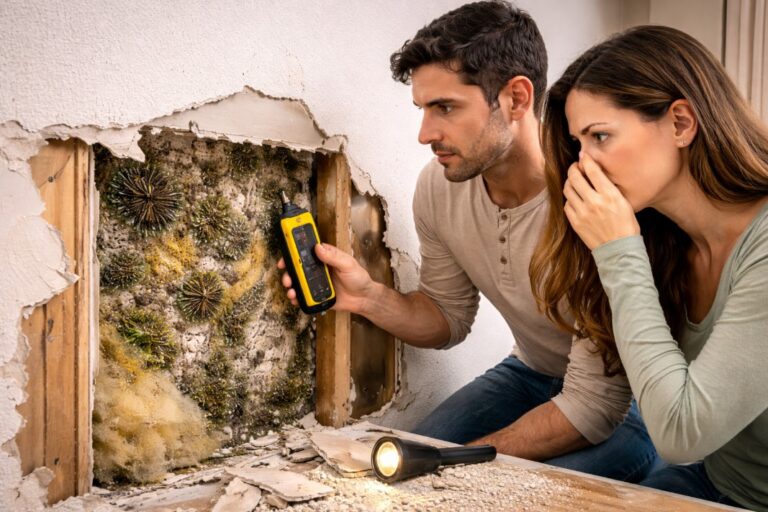
Before starting any mold removal, always inspect for leaks, condensation, or high humidity. Use a flashlight to check under sinks, behind appliances, and along exterior walls. If you notice musty odors or see signs of water damage, don’t ignore them. Fixing the source of moisture is the single most effective way to prevent mold from returning. Skipping this step will almost guarantee future problems, no matter how thoroughly you clean.
☐ Inspect for leaks, condensation, or high humidity before starting remediation.
The 8-Step Mold Remediation Process
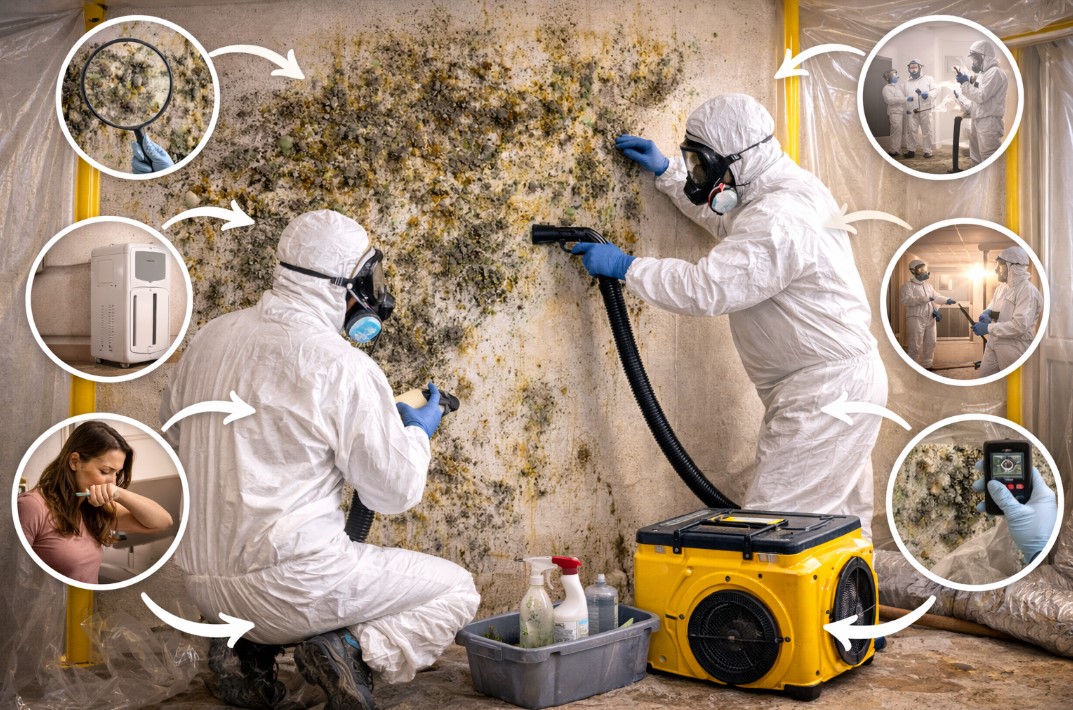
Effective mold remediation in San Diego means following a clear, safety-focused process that addresses mold and moisture together. From Point Loma to El Cajon, the steps remain the same—what changes is the type of moisture you’re fighting.
The pattern I keep seeing is that skipping even one step can lead to wasted time and repeated outbreaks. Here’s a practical walkthrough of each stage:
Find and fix the moisture source: Whether it’s a roof leak after a winter storm, a cracked window seal letting in marine fog, or an overflowing AC drain, identify and repair it first. Without this, any cleaning is temporary.
Assess the extent: Measure the affected area and check for hidden mold. A small patch (less than 10 square feet) on a bathroom wall may be manageable for a DIYer, but a musty smell behind baseboards or under flooring suggests you’ll need professional help. Check material types—moldy drywall and carpet usually can’t be salvaged.
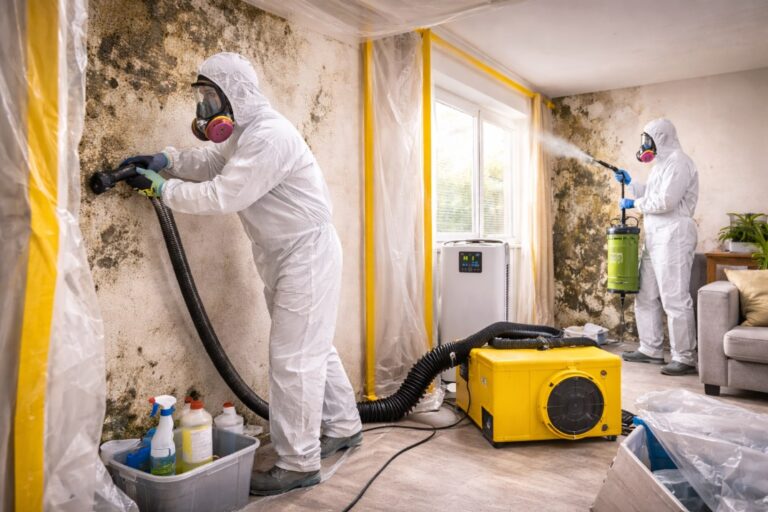
Wear protective gear: Mold spores can irritate your lungs and skin. Always use an N95 respirator, non-porous gloves, and safety goggles. These are widely available at hardware stores and usually cost $20–$40 total.
Isolate the area: Close doors, seal vents, and hang plastic sheeting to prevent spores from spreading. If you’re in a condo, check with your HOA before taping anything to shared walls or altering ventilation.
Remove contaminated materials: Moldy drywall, carpeting, and insulation should be carefully bagged and discarded. Don’t try to clean and reuse them—research from the EPA and CDPH shows that absorbent materials often harbor mold deep inside.
Clean and scrub surfaces: Hard, non-porous surfaces (like tile or glass) can be scrubbed with detergent and water. Never use bleach on porous materials—EPA guidance is clear that bleach may not kill mold roots in drywall or wood.
Dry thoroughly: Use fans and dehumidifiers (rental units typically cost $30–$50 per day) to dry the area within 24–48 hours. This prevents regrowth and is especially critical in humid coastal neighborhoods.
Monitor for regrowth: After repairs, use a hygrometer (usually $10–$30) to keep humidity below 50%. Check for musty odors or new spots weekly, especially after marine fog or rain.
For large areas, hidden mold (behind walls, beneath floors), or if HVAC systems are involved, always call a certified San Diego mold remediation professional. Drying timelines are strict: aim for visible drying within 24 hours, with continued dehumidification for up to 48 hours to ensure complete moisture removal.
☐ Complete each step in order—don’t skip moisture repairs or drying.
DIY or Call a Professional?
Small mold problems—think a patch the size of a bath towel—can often be handled by careful homeowners, provided the underlying moisture is minor and easy to fix. For example, a single patch of bathroom ceiling mold from shower condensation is usually manageable.
And this is where it gets interesting: mold removal gets riskier and more complex when you’re dealing with larger infestations (over 10 square feet), mold in HVAC ducts, or hidden growth behind walls and floors. These situations can expose you to high concentrations of spores, require special containment, or involve structural repairs.
If you rent, California law requires that you notify your landlord promptly about any leaks or mold. Landlords are responsible for correcting moisture sources and addressing significant mold issues. Document everything with photos and emails—don’t just rely on text messages.
For condo owners, check your HOA’s rules before starting demolition or repairs. Mold in shared walls or plumbing may fall under their responsibility, and unauthorized work can create insurance or liability headaches.
Households with immunocompromised members, elderly residents, or young children should always err on the side of caution and consult a professional. If you’re unsure about the extent of the damage, can’t identify the moisture source, or smell mold but can’t find it, it’s time to call a licensed San Diego mold specialist.
☐ If unsure about the extent or source, consult a licensed San Diego mold remediation specialist.
Preventing Mold Regrowth in San Diego Homes
Preventing mold from coming back means making moisture control part of your regular home maintenance. In San Diego, the challenge is unique: coastal neighborhoods deal with persistent marine fog and salty air, while inland homes might face condensation after cool nights or leaks after rare heavy rains.
Use exhaust fans every time you shower, cook, or run the dryer. Make sure they vent outside—not just into the attic or crawlspace. Fix leaks as soon as you notice them, especially after a winter storm or the first hint of “May Gray” or “June Gloom.”
Monitoring humidity is practical and affordable. Keep indoor humidity below 50% using a simple hygrometer. If you notice that closets, attics, or crawlspaces feel damp or musty, improve airflow with vents or fans. Some studies show that boosting ventilation in enclosed spaces can significantly reduce condensation and mold risk.
What surprised me most when talking with local condo owners is that shared walls, plumbing stacks, and even rooftop drains can cause mold problems that cross unit boundaries. Always check your HOA’s rules and report any suspected leaks in common areas right away. For renters, regular inspection after foggy or rainy periods is your best defense.
☐ Regularly inspect for new leaks or condensation, especially after foggy or humid weather.
Official Guidance
Multiple agencies provide evidence-based recommendations for safe, effective mold remediation:
- The EPA emphasizes that addressing moisture sources is the first step—simply cleaning visible mold is not enough.
- According to the CDC, always wear protective gear and isolate work areas to prevent spores from spreading during remediation.
- The California Department of Public Health recommends discarding absorbent materials, such as drywall or carpet, that cannot be thoroughly cleaned.
- FEMA guidelines stress the importance of drying all affected areas within 24–48 hours to prevent regrowth.
- The EPA also states that bleach should not be used on porous materials like drywall or wood, as it may not eliminate mold at the root.
Sources Note
Organizations Used:
– U.S. Environmental Protection Agency (EPA)
– Centers for Disease Control and Prevention (CDC)
– California Department of Public Health (CDPH)
This article is for informational purposes only. Always consult a certified mold remediation specialist for severe or persistent problems.
FAQ
1. How long does mold remediation take in a San Diego home?
For small, accessible areas, mold remediation can often be completed in 1–3 days, with drying taking up to 48 hours. Large or hidden infestations may require a week or more, especially if repairs are needed.
2. Can I remove mold myself, or do I need a professional?
You can handle small patches (less than 10 sq. ft.) if the moisture source is minor and easily fixed. Larger problems, hidden mold, or issues involving HVAC systems should be managed by a certified San Diego mold specialist.
3. What is the best way to prevent mold regrowth after remediation?
Maintain indoor humidity below 50%, use exhaust fans, fix leaks promptly, and ensure all areas are dried thoroughly within 24–48 hours after any water event.
4. How do I know if I have hidden mold behind walls or under floors?
Signs include persistent musty odors, peeling paint, warped floors, or health symptoms that improve outside the home. Moisture meters and professional inspections can help locate hidden mold.
5. Is mold in my bathroom dangerous?
While most bathroom mold is a nuisance, it can pose risks for people with asthma or allergies. Address it promptly and improve ventilation to prevent future growth.
6. What should landlords and tenants do about mold problems?
Tenants should document and report any leaks or mold immediately. Landlords are responsible for fixing moisture sources and performing necessary mold remediation, per California law.
7. Does insurance cover mold remediation in California?
Coverage varies by policy. Some homeowners insurance policies exclude mold remediation unless the mold was caused by a covered water loss. Check with your insurer for details.
8. How can I tell if the moisture problem is fixed for good?
Monitor with a hygrometer, look for new leaks or condensation after storms or foggy weather, and check for recurring musty odors. If issues persist, consult a professional for a thorough inspection.
Next Steps
- Schedule a moisture inspection with a local San Diego specialist if you suspect leaks or recurring mold.
- Invest in a hygrometer and monitor your home’s humidity, especially after foggy or wet weather.
- If you’re a renter, document any signs of moisture or mold and notify your landlord promptly.