Mold Inspection or Testing: How to Tell Which One You Need
San Diego Homeowner Guide
If you see, smell, or suspect mold in your home, opt for a mold inspection first—this helps identify moisture sources and any hidden mold that might be lurking out of sight. Mold testing is only necessary if you need lab results to confirm spore types for legal, insurance, or health documentation. In a place like San Diego—where coastal fog, the marine layer, and inland heat create a mix of moisture risks—knowing whether you need an inspection or testing is essential for protecting both your property and your peace of mind.
San Diego’s unique weather patterns bring challenges to homes new and old, from “June Gloom” along the coast to dry heat in neighborhoods further inland. Beach cottages might battle salty air and condensation, while modern condos can trap moisture after a hot day cools down rapidly. Because moisture problems are common across the county, understanding mold inspection vs mold testing can help you act quickly and avoid bigger repairs later.
Quick Answer
- Mold inspection finds visible or hidden mold, pinpoints moisture sources, and recommends fixes.
- Mold testing collects air/surface samples to identify spore types and levels.
- Choose inspection first if you notice musty smells, water damage, or visible growth.
- Testing is useful for unexplained health symptoms, insurance claims, or after remediation.
- Fixing moisture is always more important than identifying mold species.
- Professional help is best for widespread or hidden mold, or if you rent in a multi-unit building.
Mold Inspection — What It Is and When You Need It
A mold inspection focuses on tracking down the source of excess moisture and identifying both visible and hidden mold growth, which is especially relevant for San Diego homes exposed to fog, condensation, and the occasional storm. The main goal is locating the reason mold is growing—whether that’s a leaky pipe, window condensation, or poor ventilation.
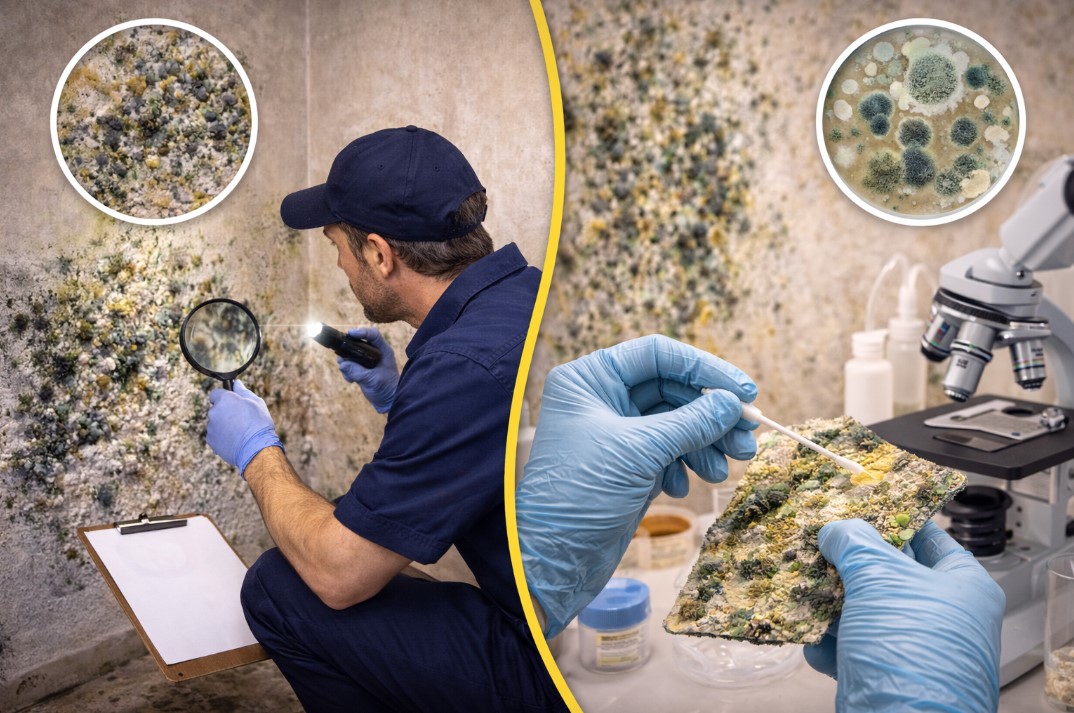
A thorough mold inspection typically starts with a visual check of the property, both inside and out. Professionals use moisture meters and sometimes thermal imaging cameras to spot damp areas behind walls or under floors. This approach is especially valuable in older San Diego homes, where decades-old plumbing or weathered windows can let in water unnoticed. Even newer condos near the ocean can suffer hidden leaks after a stretch of June Gloom or a sudden coastal downpour.
Musty odors, recent plumbing leaks, or water stains on walls are common triggers for scheduling an inspection. In coastal condos, it’s wise to inspect regularly because small leaks can quickly escalate, especially if sea air and humidity are trapped inside. For anyone buying a home in San Diego, an inspection is a practical step—what surprised me most is how often moisture issues go unnoticed during standard home inspections, only to surface later as mold.
If you spot any new musty smell, check under sinks, around windows, and in closets for moisture or discoloration within 24 hours. This quick action can help you catch a problem before it spreads.
Deciding between a DIY inspection and hiring a professional comes down to the size and visibility of the issue. For minor, accessible spots—like a little mildew under a bathroom sink—DIY may be sufficient. But for larger infestations, recurring leaks, or suspected hidden mold, a professional mold inspection in San Diego is the safer choice. Professionals use specialized equipment and know the local climate’s quirks, reducing the risk that you’ll miss a hidden problem.
Mold Testing — When Is It Really Necessary?
Mold testing, by contrast, is about identifying the specific types and amounts of mold spores in your home. It doesn’t find moisture or pinpoint the source of a mold problem. Instead, it involves taking air or surface samples, then sending them to a lab for analysis.
Testing is rarely needed if you can already see or smell mold or know there’s a moisture problem. In those cases, cleaning up and fixing the moisture is the priority. Mold testing becomes useful when you need documentation—such as for insurance claims, landlord disputes, or at a physician’s recommendation due to unexplained health symptoms. After a mold remediation, testing can verify if spore levels have returned to normal.
San Diego’s high humidity and older building stock often lead to benign, non-toxic mold types (like Cladosporium or Penicillium) that don’t require lab confirmation. The pattern I keep seeing is that homeowners sometimes order costly tests simply for peace of mind, when addressing the moisture problem would be more effective. Testing does not make your home “safe” if you haven’t solved the underlying moisture issue.
If a physician, insurance adjuster, or legal process requires specific mold identification, order testing. Otherwise, save your resources for fixing leaks and improving ventilation.
It’s also important to remember that DIY mold test kits have significant limitations—they often detect background mold that’s present in any home, especially in San Diego’s mild, damp climate. Professional sampling is more reliable, but still only warranted in specific circumstances.
Inspection vs. Testing — How to Decide for Your Home
When deciding between mold inspection vs mold testing, think first about your symptoms, urgency, and property type. Inspection is designed to find the cause of your problem, while testing verifies what types of mold are present—and only when that information is truly needed.
For renters, especially in multi-unit San Diego buildings, documentation from testing may be required if you need to push a landlord or property manager to act. Condo owners should always check with their HOA before beginning any work, as community rules may dictate the process.
If you’re buying a home—particularly one built before the 1980s, or in a beachside neighborhood—an inspection should be a top priority. San Diego’s older homes often have hidden moisture issues behind walls or under floors, and a standard home inspection may not catch them. What’s more, coastal fog and inland heat both drive condensation and leaks in different ways, so even newer properties aren’t immune.
The best timeline: after any leak or water event, schedule a mold inspection within 48 hours. Mold can begin to grow within 24–48 hours in moist conditions. Testing only comes into play if you need verification after cleanup or if health and legal concerns arise.
Here’s what I noticed: DIY efforts can be successful for small, visible problems, but large or hidden growth calls for a professional. If you attempt repairs yourself and the problem returns—or spreads—call in an expert for a thorough inspection.
What to Expect from a Professional Mold Inspection in San Diego
A professional mold inspection in San Diego is more than just a quick walkthrough. Inspectors start with an interview to understand the property’s history, recent leaks, and any health concerns. They’ll then check the exterior for signs of water intrusion—like cracked stucco, roof issues, or poor drainage. Inside, they use moisture meters and sometimes thermal imaging to create a moisture map of your home.
Local experts are particularly attuned to the effects of coastal fog, marine layers, and the inland heat that defines San Diego’s microclimates. These conditions can create unexpected humidity cycles: for example, a chilly, foggy morning followed by a warm, sunny afternoon can cause condensation along walls and windows, especially in older buildings and condos with minimal insulation.
Typical costs for a thorough inspection range from $200 to $600, depending on the size and complexity of your home. While it’s an investment, early detection can save thousands in future repairs. Pros don’t just point out mold—they’ll advise on ventilation strategies and long-term moisture control, which is especially useful for homes along the coast or in dense urban settings.
Ask your inspector to show you all moisture hotspots and explain how to reduce indoor humidity. This empowers you to prevent future problems, not just fix the current one.
Common Mistakes and Myths About Mold Inspection & Testing
Many San Diego homeowners believe you need mold testing to know if you have a problem. In reality, visible mold or a musty odor is enough to confirm there’s an issue—what matters most is fixing the underlying moisture problem.
A frequent mistake is ignoring small leaks or odors in supposedly “dry” inland neighborhoods. Despite the arid reputation, inland homes can trap humidity during hot days and cool nights, particularly if ventilation is poor. Another myth: all mold is toxic. Most types found in homes are not dangerous, but any persistent moisture should be addressed to prevent structural damage and potential health risks.
Some residents try to tackle complex issues with DIY mold kits purchased online or at hardware stores. Unfortunately, these kits can be misleading and often fail to identify the root cause. And this is where it gets interesting: focusing on “killing” visible mold spots without tracking and fixing moisture allows the problem to return—sometimes worse than before.
Focus on finding and fixing moisture, not just “killing” mold spots. That’s the most reliable way to protect your property and indoor air quality.
Official Guidance (EPA, CDC, CA Agencies)
Official agencies are clear on the subject of mold inspection vs mold testing:
- The EPA states: “If you see or smell mold, you should assume a problem and clean it up. Testing is usually unnecessary.”
- The CDC emphasizes: “The key to mold control is moisture control.”
- EPA: “Sampling for mold is not routinely recommended.”
- The California Department of Public Health advises: “Visible mold growth or water damage should be cleaned and moisture problems corrected.”
- The CDC further notes: “No standards for acceptable mold levels exist. Fix the source of moisture.”
- The EPA also advises: “Professional help may be needed for large or hidden mold problems.”
Sources Note
Sources for this article include the U.S. Environmental Protection Agency (EPA), Centers for Disease Control and Prevention (CDC), and California Department of Public Health. This article is for informational purposes only. Always consult a qualified mold or moisture specialist for confirmed problems.
FAQ
What is the difference between mold inspection and mold testing?
Mold inspection is a process where a professional looks for visible and hidden mold, identifies the source of moisture, and recommends solutions. Mold testing, on the other hand, involves collecting samples to identify the type and concentration of mold spores present.
Do I need mold testing if I already see mold in my home?
No, if you see or smell mold, the priority is to remove it and fix the moisture source—testing is generally unnecessary unless required for documentation or health concerns.
How do I know if I need a professional mold inspection in San Diego?
Consider a professional inspection if you notice persistent musty odors, visible mold, recent water damage, or live in an older home or condo near the coast. Renters in multi-unit buildings may also need documentation for landlords.
Can I use a DIY mold test kit instead of hiring a pro?
DIY kits can sometimes detect the presence of mold, but they often miss hidden moisture problems and can be misleading. Professional inspections are more thorough and better suited for complex or widespread issues.
How much does a mold inspection cost in San Diego?
Costs typically range from $200 to $600, depending on the size and complexity of the property.
Is mold testing necessary before buying a house?
Inspection is more important than testing—focus on identifying moisture issues and visible mold before purchase. Testing is only needed if documentation is required for legal or health reasons.
What should I do if my landlord refuses to test for mold?
Document the problem with photos and written communication. Notify your landlord in writing and, if necessary, contact local agencies or tenant advocacy groups for assistance.
How quickly should I get a mold inspection after a water leak?
Schedule a mold inspection within 48 hours of any water event to prevent mold growth and further damage.
CTA Block
Schedule a professional mold inspection if you notice new odors, leaks, or water stains. Take steps to fix leaks and control indoor humidity right away—prevention is key. Contact a local mold specialist for advice if you live in a condo, rental, or have health concerns.