Mold on Bathroom Ceiling: Why It Happens and How to Stop It
Mold on bathroom ceilings is almost always the result of excess moisture—usually from poor ventilation, lingering humidity, or hidden leaks—creating the perfect environment for mold to grow.
If you own or rent a home in San Diego, you’re probably no stranger to this issue. The city’s famous coastal fog, regular “June Gloom,” and the prevalence of older homes and condos with aging bathroom fans all add up to a higher risk of bathroom ceiling mold. That dark patch is more than an eyesore; it might be your first warning sign that moisture is getting out of control, which can lead to bigger headaches for your property and well-being. Addressing ceiling mold quickly—by targeting the underlying moisture—is crucial in San Diego’s unique climate.
- Bathroom ceiling mold is caused by trapped moisture from showers, steam, or leaks.
- Poor ventilation is the most common reason mold appears on ceilings.
- Mold growth is a symptom; excess moisture is the root cause.
- San Diego’s coastal weather and marine layer increase local risk.
- Fixing ventilation and controlling humidity are key to prevention.
- Clean existing mold safely, but address the underlying moisture to stop it for good.
Why Mold Grows on Bathroom Ceilings
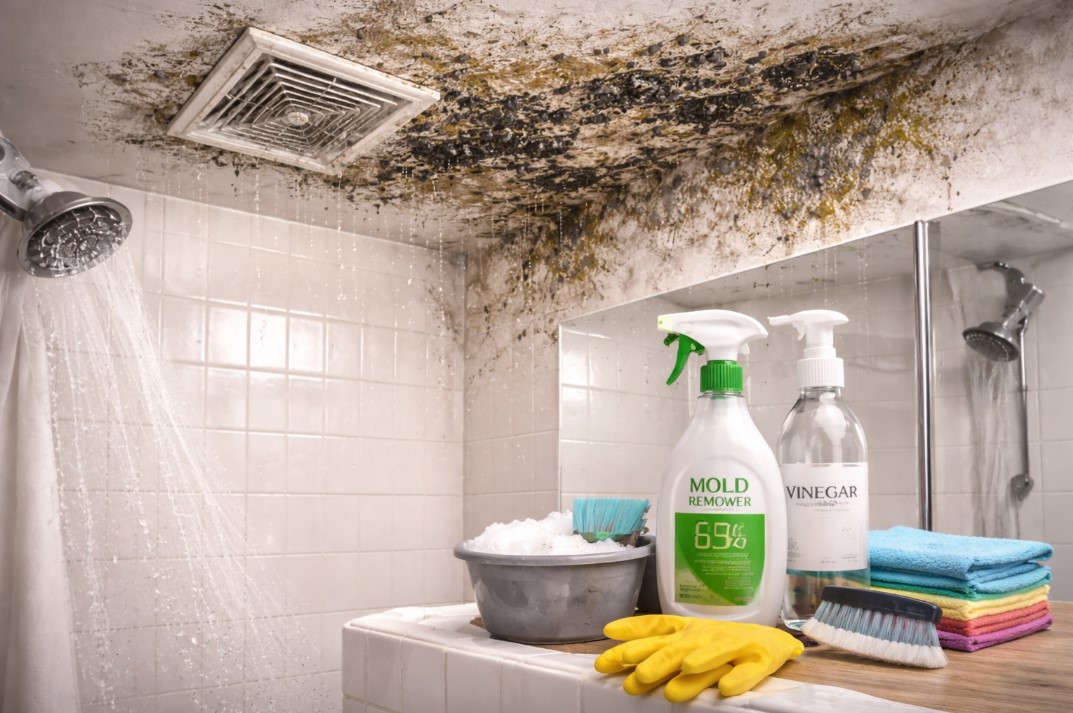
Mold thrives on bathroom ceilings because moisture lingers where warm, humid air meets a cooler surface, and in San Diego, that’s a frequent occurrence thanks to coastal conditions and sometimes outdated ventilation systems. When you take a hot shower, steam rises and condenses on the ceiling, especially if the air can’t escape quickly. This condensation soaks into porous materials—paint, drywall, or even textured plaster—giving mold spores (which are always floating around) a damp place to take hold.
Here’s what I noticed: even in well-maintained homes, if the exhaust fan isn’t strong enough or isn’t left on long enough, that warm, moist air just keeps collecting above your head. San Diego’s marine layer and June Gloom can make the problem worse, as the air outside is often cool and damp, preventing bathrooms from drying out naturally. If your home or condo is older, the odds are higher that insulation is lacking, vents are underpowered, or shower steam has nowhere to go.
Sometimes, the problem isn’t just condensation. Leaks from above—whether a roof issue during winter storms or a sneaky plumbing leak from an upstairs neighbor—can create a persistent damp patch. These leaks often feed hidden mold growth, which you might only spot as water stains, bubbling paint, or peeling drywall on the ceiling.
The pattern I keep seeing in San Diego homes: mold patches almost always show up where condensation forms after showers, or where a slow leak keeps things damp. So, after you shower, check for beads of water or a clammy feeling on the ceiling. Watch for peeling paint or yellowish stains, too—these are clues that moisture is sticking around long enough for mold to move in.
How to Identify Hidden Moisture Problems
Hidden moisture is the real culprit behind recurring mold on bathroom ceilings, especially in homes and condos around San Diego where marine air or neighbor leaks can complicate things. You’ll want to look past the obvious and track down sneaky sources of dampness if you keep seeing mold come back.
Start with your senses. If you notice bubbling paint, a musty or earthy smell, or persistent dampness that never seems to dry, those are strong signs of a hidden leak or chronic humidity. Mirrors that fog up during showers—and stay fogged long after—signal poor ventilation. If your towels are still damp hours after you’ve finished showering, or if the air feels thick and clammy, you’re likely facing a moisture problem.
In condos or rentals, it gets interesting: sometimes, a neighbor’s plumbing leak or shared wall issue can cause moisture to seep into your ceiling from above or the side. This is especially common in older buildings where pipes and ventilation systems are shared. If you spot a mold patch near a wall that connects to another unit, or if the ceiling discoloration seems to spread in odd directions, check with your HOA or property manager to rule out a neighbor-caused issue.
If you live inland, pay attention during summer when high outdoor temperatures can trap humidity inside, making it harder for your bathroom to dry out.
A practical test: after a shower, place a tissue flat against the ceiling. If it clings or feels damp after a few minutes, moisture is lingering too long. For a more precise check, consider picking up a basic moisture meter (often $20–$40 at hardware stores) to spot hidden dampness in drywall or plaster.
When you suspect a hidden leak—such as water stains that keep growing, or persistent musty odors that don’t go away—it’s time to call in a professional. DIY fixes won’t stop mold if water keeps feeding it from behind the ceiling.
Steps to Remove Mold from Your Bathroom Ceiling
You can safely remove small patches of mold from your bathroom ceiling, as long as you follow the right steps and use proper safety gear. San Diego’s climate makes this a regular chore for many, but it’s important to know your limits—especially if the problem keeps coming back or covers a large area.
Start by protecting yourself. Always wear gloves, goggles, and a mask (an N95 or similar is best) to avoid direct contact with mold spores, which can trigger allergies or asthma in sensitive individuals. Open a window or run the exhaust fan to keep fresh air moving.
For a small area—less than 10 square feet—mix a little dish detergent with warm water. Apply the solution gently to the moldy spot using a sponge or soft brush, scrubbing until the stain lifts. Rinse with a clean damp cloth, then dry the area thoroughly. Avoid using bleach on porous surfaces like drywall or textured ceilings; it doesn’t soak in deep enough to kill mold roots and can sometimes cause discoloration or damage.
Never just paint over mold or wipe it away without cleaning the surface. Mold will quickly grow back if you don’t remove it and dry the spot fully. If you discover the mold is growing into the drywall, the area is soft or crumbly, or if the patch is larger than a dinner plate, it’s time to call a mold remediation professional.
What surprised me most: even after a thorough cleaning, if you don’t address the moisture source—like a weak fan or lingering leak—the mold almost always returns. So, treat cleaning as a short-term fix, not a permanent solution.
Always clean small areas promptly, but if you see the mold return soon after, or if you notice symptoms like persistent coughing or sneezing, consult a professional. Mold exposure may be linked to worsening allergies or asthma, especially for children or anyone with respiratory sensitivities.
Preventing Mold on Bathroom Ceilings for Good
The key to stopping bathroom ceiling mold is to prevent moisture from building up in the first place, especially in San Diego where coastal weather can add to the problem. Good airflow and quick drying are your best lines of defense.
Always turn on your bathroom exhaust fan before you start your shower, and keep it running for at least 20–30 minutes afterward. Many older homes and condos in San Diego have underpowered or noisy fans that barely move air—if yours struggles, it’s time to upgrade. Newer, quieter models can cost $80–$200 and make a dramatic difference in controlling humidity.
Whenever possible, crack open a window to let fresh air in, especially during foggy mornings or marine layer days when outside air is damp but can help create airflow. If you notice condensation forming on the ceiling after a shower, use a squeegee or a towel to quickly wipe away the moisture. It only takes a minute and can help stop mold before it starts.
Always fix leaks right away—whether it’s a drip from a pipe, a roof leak during storm season, or water coming from a neighbor’s unit in a shared building. Condo owners should check their HOA rules before making repairs, as some moisture issues may be covered or require special contractors.
And this is where it gets interesting: you can test your fan’s effectiveness by holding a tissue up to the vent. If it doesn’t stick, your fan isn’t pulling enough air and needs to be cleaned, repaired, or replaced. Humidity in your bathroom should stay below 50%—you can check this with a basic hygrometer, which typically costs $10–$25.
By combining these habits—using fans, opening windows, wiping away condensation, and fixing leaks—you’ll dramatically lower the odds of mold returning, even during San Diego’s dampest months.
When to Call a Professional
There are times when cleaning and prevention just aren’t enough, and it’s important to know when to bring in an expert. If you keep finding mold on your bathroom ceiling despite your best efforts, or if you spot a patch larger than 10 square feet, you’ll need a professional assessment.
Other signs that you should call a pro include mold growing in or around your HVAC vents, visible mold spreading inside walls or above the ceiling, or if you suspect a plumbing or roof leak you can’t pinpoint. In multi-unit buildings, unexplained moisture might be coming from a neighbor’s unit or common-area pipes—a situation best handled by a certified inspector.
If you’re dealing with an active leak, act fast: stop the water within 24 hours if possible, and dry out the bathroom within another 24–48 hours. Mold can start to grow in as little as 24 hours, so quick action is critical.
Book a local mold or leak detection specialist for a full assessment if the problem is persistent, spreading, or you’re not sure about the source. Many offer moisture mapping and infrared scanning to spot hidden leaks without damaging your ceiling. For renters, always document the problem and notify your landlord in writing; property owners have an obligation to address mold and moisture issues promptly.
Official Guidance: Mold on Bathroom Ceilings
The U.S. Environmental Protection Agency (EPA) and Centers for Disease Control and Prevention (CDC) both provide clear recommendations for dealing with mold on bathroom ceilings:
- Fix all leaks and moisture problems immediately—do not delay repairs. (EPA)
- Use exhaust fans or open windows during and after showering. (CDC/EPA)
- Clean up small areas of mold with soap and water; avoid mixing cleaning products. (EPA)
- If mold covers a large area or keeps coming back, hire a certified mold professional. (CDC)
- Don’t paint or caulk over mold—remove it and dry the area first. (EPA)
- Mold exposure can worsen asthma and allergies, especially in children. (CDC)
For California-specific guidance, you can also check the California Department of Public Health’s Mold Program.
Sources Note
Key organizations referenced: U.S. Environmental Protection Agency (EPA), Centers for Disease Control and Prevention (CDC), California Department of Public Health.
This article is for informational purposes only. Always consult a licensed professional for confirmed or persistent mold or moisture issues in your home.
FAQ
What causes mold to form on bathroom ceilings in San Diego homes?
Excess moisture from poor ventilation, shower steam, or leaks—combined with the city’s marine layer or “June Gloom”—creates ideal conditions for mold to grow on ceilings.How can I tell if the black spots on my ceiling are mold or dirt?
Mold patches are usually fuzzy or slimy, may have a musty odor, and often grow or spread over time. Dirt is more likely to wipe off easily and won’t have a strong smell.Is it safe to clean bathroom ceiling mold myself, or should I call a pro?
You can clean small areas (under 10 sq ft) with soap and water, wearing gloves and a mask. For larger patches, recurring mold, or suspected leaks, call a professional.How do I prevent mold from coming back after cleaning my ceiling?
Fix all leaks, use a strong exhaust fan during and after showers, keep humidity below 50%, and wipe down condensation. Addressing moisture is key to lasting results.Can poor bathroom ventilation cause mold even if I don’t see leaks?
Yes, inadequate ventilation allows steam to linger and condense on ceilings, providing the moisture mold needs—even without visible leaks.Are certain San Diego neighborhoods or building types more at risk for bathroom mold?
Coastal neighborhoods, homes with older or underpowered fans, and multi-unit condos with shared plumbing are at higher risk.What’s the best way to remove mold from a painted ceiling?
Use a mild detergent and water with a soft sponge, scrubbing gently. Avoid bleach on porous surfaces, and always dry the area fully afterward.Will using bleach remove bathroom ceiling mold permanently?
Bleach may kill surface mold but won’t penetrate porous materials, so mold can return if moisture isn’t controlled. Address the root cause for lasting results.
CTA Block
- Inspect your bathroom ceiling for signs of mold or excess moisture this week.
- Test your exhaust fan or upgrade it for better moisture control.
- Book a San Diego mold or leak detection specialist if you notice persistent problems.