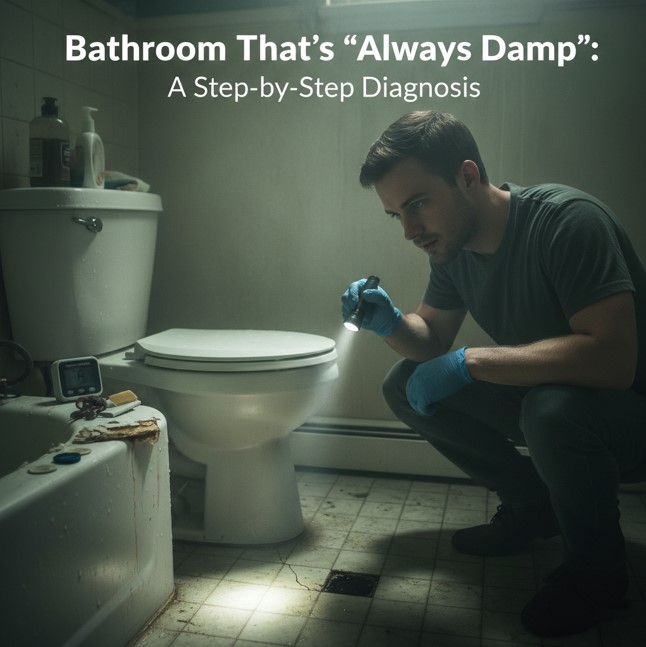
If your bathroom always feels damp—long after the shower steam clears—you’re not alone, especially in San Diego homes where coastal fog and marine layers meet inland heat. Whether you live in a classic 1950s bungalow, a new build, or a condo with shared walls, persistent bathroom moisture isn’t just uncomfortable; it’s the leading cause of mold and hidden water damage. This guide helps San Diego homeowners and renters systematically diagnose why their bathroom stays damp, with step-by-step strategies to control moisture, detect leaks, improve ventilation, and prevent mold—tailored for both coastal and inland realities.
1. Identify Hidden Moisture Sources in Your Bathroom
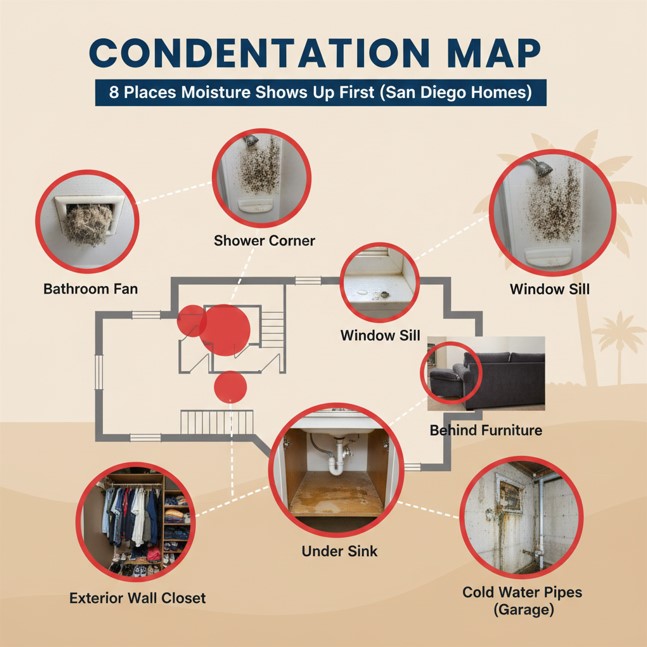
When your bathroom always feels damp, start with a systematic search for hidden moisture sources. In San Diego, the root cause could be anything from a slow under-sink leak to moisture sneaking in from shared condo plumbing. Coastal homes get extra humidity from the marine layer and June Gloom, while inland bathrooms might battle sweating AC ducts or a stubborn HVAC condensate line clog.
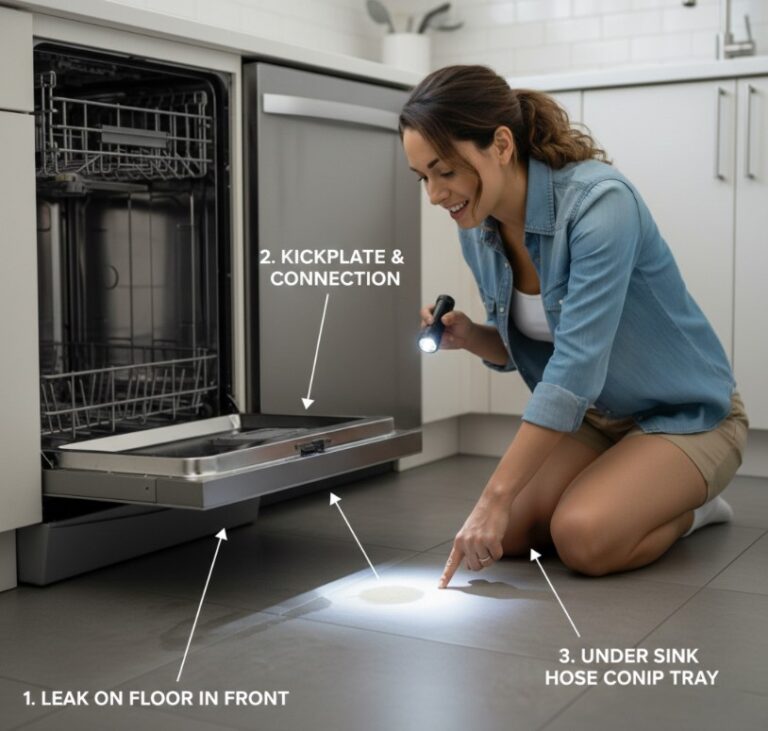
Begin with the basics: check under your sink for drips or damp patches. Even a slow leak can turn a dry cabinet into a musty mess. Next, press gently around the base of your toilet—soft spots, discoloration, or a persistent odor can signal a failed wax ring or slow toilet leak. Don’t ignore your grout and caulking; cracks or moldy spots can let water wick behind walls, especially after steamy showers.
If you live in a condo or apartment, remember that plumbing in shared walls can leak without your knowledge. Look for water stains on walls or ceilings, especially where your bathroom backs up to a neighbor’s.
For a quick test, grab a dry paper towel and wipe around the base of the toilet, under the sink, and along the shower door seal. If it comes away damp, slimy, or smells musty, you’ve found a likely source of your bathroom’s moisture woes.
To go deeper, consider a basic moisture meter or digital hygrometer (both under $50). These tools help you spot dampness in drywall, baseboards, or even bath mats that never seem to dry.
Do this now:
Spend 10 minutes today checking under your sink, around the toilet base, and all caulk lines. Wipe each spot with a dry paper towel and note any wetness or odd odors.
2. Prioritize Immediate Actions: The 0–24–48 Hour Moisture Response
When you spot a leak or any water event in your bathroom, time is critical. Mold prevention starts with moisture control—not bleach. The EPA recommends drying all affected areas within 24–48 hours to significantly reduce mold risk.
0 Hour (Immediately):
First, stop the water at the source. If it’s a toilet or sink leak, close the shut-off valve. For a shower valve leak behind the wall or a roof leak vs. condensation, stop using the fixture or cover the area. Remove any standing water using towels or a wet/dry vac. If the weather allows, open windows and doors to let in fresh, dry air—but if you’re coastal and facing heavy marine layer humidity, you may want to rely more on indoor fans and dehumidifiers.
24 Hours:
By the end of day one, set up fans or a portable dehumidifier to encourage drying. Remove wet items like bath mats, towels, and even shower curtains. If you rent, photograph all affected areas and notify your landlord right away—documenting moisture events is key for both repairs and insurance. Condo owners may need to alert their HOA if shared walls or plumbing are involved.
48 Hours:
Check all previously damp areas with a moisture meter. If anything still feels wet or you see visible mold, it’s time to call a professional—especially if the water was contaminated (from a sewer backup, for example) or has soaked porous materials like drywall or carpet. Drying within 48 hours is your best shot at preventing mold growth.
Safety Note:
If you see visible mold larger than a dinner plate or if the water is from a sewage source, don’t attempt DIY cleanup. Mold spores and contaminated water can be hazardous—call a professional for safe removal and post-remediation verification.
Do this now:
If you find moisture, immediately shut off the water source, mop up all standing water, and set up a fan or dehumidifier within the hour.
3. Ventilation Matters: Fixing Bath Fans, Reducing Condensation, and Airflow Tips
Ventilation is your bathroom’s best defense against lingering dampness, especially in San Diego’s coastal neighborhoods that get hit with June Gloom and marine layer humidity. If your mirrors fog up for more than 10 minutes after a shower, or you notice peeling paint and mildew stains on the ceiling, your ventilation is likely underperforming.
Start with your bath fan. A quick tissue test tells you a lot: turn the fan on and hold a tissue up to the grille. If it barely holds or falls off, your fan is either clogged or too weak. Unscrew the cover and clean out any lint or dust. In older homes, make sure your fan vents directly outdoors—not just into the attic or a wall cavity, which can create hidden moisture problems over time. This is a common issue in San Diego homes built before 1980.
Upgrade your fan if needed. Modern bathroom fans are rated by CFM (cubic feet per minute)—aim for at least 50–80 CFM for a standard bath, and more for master suites. Installing a timer switch or humidity sensor lets the fan run long enough after showers (aim for 20+ minutes). If you rent or have HOA rules, ask about replacing or servicing the fan.
For extra airflow, crack a window open during and after showers—if it’s safe and the outdoor air isn’t too humid. Inland homes with summer heat may benefit from a small dehumidifier; coastal homes should focus on exhaust fans and squeegeeing down shower walls after each use.
Do this now:
Test your bath fan with a tissue today. If it’s weak, clean the cover or consider a replacement. Run your fan for 20 minutes after every shower, and add a timer if you often forget.
4. Moisture Monitoring and Mold Prevention: Ongoing Steps for San Diego Homes
Ongoing bathroom moisture control is all about vigilance. The EPA recommends keeping indoor relative humidity (RH) below 60%—ideally 30–50%—to prevent mold. In San Diego, where coastal humidity and inland heat can spike, a simple digital hygrometer is your best friend.
Place your hygrometer at head height, away from the shower but not directly in the fan’s airflow. Check RH before and after showers, and after running the exhaust fan. If RH stays above 60% for hours, it’s time to boost ventilation or bring in a portable dehumidifier. Moisture meters are also useful for checking drywall, baseboards, and floors, especially after a leak or water event.
Early warning signs include musty odors, black spots on caulk or grout, or RH consistently over 60%. If you catch these early, you can often solve the problem with better airflow and vigilant drying. If visible mold covers more than 10 square feet, leaks recur, or odors persist after drying, call a mold inspector for a professional assessment and post-remediation verification.
Do this now:
Place a digital hygrometer in your bathroom for the next week. Log humidity levels before/after showers and after running your fan. If RH stays high, look for hidden moisture sources and address ventilation as your next step.
FAQ
Why is my bathroom always damp even without visible leaks?
High humidity, poor ventilation, and hidden leaks can all cause persistent dampness. Even if you don’t spot a drip, condensation on windows or walls, wet towels, and slow plumbing leaks can keep your bathroom moist.
How can I tell if my bath fan is working properly?
Hold a tissue up to the running fan grille. If it sticks, the fan is pulling air. If not, clean the cover or consider upgrading to a higher CFM model.
What should I do first if I find a leak in my bathroom?
Shut off the water, remove standing water, and begin drying immediately. Document any damage with photos and notify your landlord or HOA if needed.
How long should I run my bath fan after a shower?
Run your fan for at least 20 minutes after every shower to remove excess humidity.
Should I use a dehumidifier in my bathroom in San Diego?
A compact dehumidifier can help, especially in inland homes or if your exhaust fan isn’t enough. Always aim to keep RH below 60%.
What are the signs of hidden water damage in a bathroom?
Look for soft spots in flooring, discoloration around the toilet or under the sink, musty odors, and water stains on walls or ceilings.
When should I hire a professional for bathroom moisture problems?
If you see mold larger than 10 sq. ft., water damage behind walls, or persistent leaks that don’t resolve after drying, call a professional for inspection and post-remediation verification.
Can bathroom mold go away if I fix the moisture problem?
Small areas of surface mold (on hard surfaces) can often be cleaned with detergent and water once moisture is controlled. For larger or recurring mold, professional help is recommended.
Next Actions
Do the 10-minute bathroom moisture inspection checklist today—check under sinks, around toilets, and along shower seals.
Track your bathroom’s humidity for seven days using a digital hygrometer and log the results.
If you discover leaks or visible mold that persists beyond 48 hours, document everything and schedule a professional inspection to ensure your bathroom stays safe and dry.