Indoor air quality testing is a process that measures the presence of pollutants, allergens, and contaminants in your home’s air to help identify hidden health risks.
For San Diego homeowners and renters, local factors like coastal fog, marine layers, and older building materials can all impact what’s floating in your indoor air. With many homes shut tight during June Gloom or hot inland summers, unseen contaminants can build up—sometimes with real effects on your family’s comfort and health. People are often surprised by what air quality inspections reveal, especially in neighborhoods with a mix of historic bungalows and newer condos.
- Indoor air quality testing detects pollutants, allergens, and chemical compounds inside your home.
- Tests reveal hidden dangers like mold spores, VOCs, carbon monoxide, and dust mites.
- San Diego’s coastal climate and older homes can increase moisture and airborne irritants.
- Home air quality inspections help identify sources of unexplained symptoms like headaches or allergies.
- Professional testing provides targeted recommendations for healthier indoor living.
- Results can guide decisions on ventilation, filtration, or repairs.
What Does Indoor Air Quality Testing Involve?
Indoor air quality testing involves checking your home’s air for pollutants like volatile organic compounds (VOCs), particulates, carbon monoxide, and biological contaminants. In San Diego, the process often starts with air sampling, especially after moving into an older house or completing a renovation. Homeowners and renters alike want to know what’s actually circulating through their living spaces.
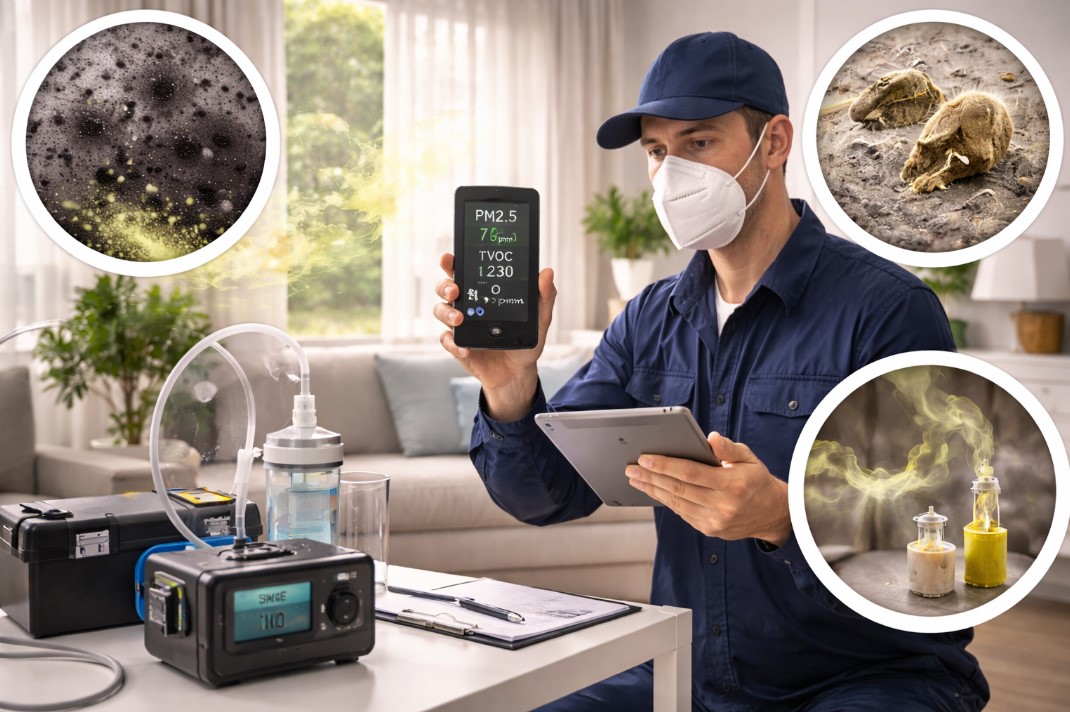
The most common methods include air sampling, surface swabs, and continuous electronic monitoring. Air sampling devices pull in air over a set period to detect things like dust, pollen, and chemical vapors. Surface swabs pick up residue from walls, vents, or other surfaces—helpful for identifying mold or bacteria that may not be airborne at the time of testing. Continuous monitors track pollutants over several days, giving a snapshot of how indoor conditions change with weather and daily activity.
A typical home air quality test looks for:
- VOCs (from paint, cleaners, building materials)
- Particulate matter (PM2.5 and PM10)
- Carbon monoxide and formaldehyde
- Biologicals such as mold spores, bacteria, and dust mites
DIY test kits are available at hardware stores and online for $20–$150, letting you spot-check for specific issues like carbon monoxide or formaldehyde. However, professional air quality inspection goes deeper, using calibrated equipment and lab analysis to identify a broader range of pollutants. Pros also know what’s typical for San Diego’s neighborhoods—the pattern I keep seeing is that older coastal homes often have unique profiles compared to newer inland builds.
During a typical San Diego inspection, the technician will walk through all rooms, check HVAC systems, and possibly set up monitors for 24–48 hours. They’ll explain what’s being tested and answer questions about local sources—like whether the marine layer is affecting humidity or if past leaks might have left hidden residues.
Schedule baseline air quality testing after moving into a new home or renovation.
Hidden Health Risks Lurking Indoors
Indoor air quality testing can uncover hidden dangers that aren’t always obvious but could be affecting your day-to-day well-being in San Diego homes. Some of the earliest warning signs include persistent allergies, unexplained headaches, asthma flare-ups, or general fatigue. These symptoms often get dismissed as “normal” or blamed on outdoor pollen, but poor indoor air can be a significant contributor.
Long-term exposure to certain pollutants in indoor air may be linked to more serious respiratory issues and heightened chemical sensitivities, especially if you spend a lot of time indoors. Vulnerable groups—like children, the elderly, or anyone with a weakened immune system—are more likely to be affected even at lower levels. And this is where it gets interesting: during San Diego’s June Gloom or high-heat spells, people close up windows for days or weeks, trapping contaminants that would otherwise dissipate. What surprised me most is how quickly air quality can dip indoors, even in homes that look spotless.
Doctors sometimes suggest tracking symptoms alongside weather changes or home maintenance activities. If you notice headaches or congestion that improve when you’re away from home, that’s a clue your indoor air deserves a closer look.
Track recurring symptoms and share them with your healthcare provider.
Why San Diego Homes Are Prone to Air Quality Issues
San Diego’s unique climate and housing stock make some homes more susceptible to air quality problems than others. Older houses and condos, especially those built before modern ventilation codes, may have aging construction materials or outdated HVAC systems that struggle to filter out pollutants. In coastal neighborhoods, the ever-present fog and marine layer raise indoor moisture levels, promoting dust mite activity and sometimes condensation around windows or in wall cavities.
Inland areas, on the other hand, see more extreme heat and heavier air conditioning use. This can lead to closed windows for much of the summer, reducing natural ventilation and allowing pollutants in indoor air—like VOCs from cleaning products or off-gassing furniture—to accumulate. Apartments and rentals often pack more people into smaller spaces and limit control over maintenance, making it harder to address persistent air quality issues without landlord support.
Here’s what I noticed: in San Diego, the mix of coastal weather and older housing means even well-kept homes can develop hidden air quality concerns. Knowing your building’s age and typical maintenance schedule helps identify what pollutants to watch for, from musty odors in historic bungalows to chemical off-gassing in recently renovated condos.
Ask landlords or building managers about recent air quality or HVAC inspections.
What Happens After an Air Quality Test?
Once your home air quality test is complete, you’ll receive a report summarizing findings for each tested pollutant. Understanding these results can seem daunting, but most reports use clear charts or color-coded ranges to show which levels are safe and which may need action. For example, high counts of PM2.5 (fine particulate matter) often mean it’s time to change air filters or address a nearby source like smoking or frequent cooking.
Recommendations may include improving ventilation (opening windows, installing exhaust fans), sealing leaks that let in outside air or moisture, or adding air purifiers with HEPA or activated carbon filters. Sometimes, removing a source—such as switching to low-VOC products or repairing a leaky pipe—can make a major difference.
Choosing between DIY fixes and professional remediation depends on the scope of the problem. Swapping filters or running dehumidifiers is usually a safe DIY approach. But if your report flags serious issues, like high carbon monoxide or widespread mold spores, it’s wise to consult a specialist. Condo owners should check with the HOA before making changes to shared systems.
A typical timeline after testing:
- 0–24 hours: Increase ventilation, especially if carbon monoxide or VOCs are high.
- 24–48 hours: Address minor repairs, replace filters, or isolate a pollution source.
- Beyond 48 hours: Plan for long-term improvements like upgraded HVAC or ongoing monitoring if problems persist.
Review your report and prioritize fixes by health impact and cost.
What Do Authorities Say About Indoor Air Quality?
The EPA Mold Guidelines recommend regular air quality assessments in homes, particularly after renovations or water damage. The Centers for Disease Control and Prevention (CDC) highlights a link between poor indoor air and increased respiratory and allergy symptoms. The California Department of Public Health (CDPH) urges homeowners to test for carbon monoxide and formaldehyde, especially in older or newly remodeled spaces.
The American Lung Association and the Asthma and Allergy Foundation of America point to dust, pet dander, and moisture as key indoor triggers—especially for people with asthma or allergies. Both organizations stress the importance of proper ventilation and routine HVAC maintenance. Professional inspection is generally advised for persistent symptoms or if you’ve experienced leaks or flooding, as these can introduce contaminants that are hard to detect without specialized equipment.
Sources Note
Sources used include the Environmental Protection Agency (EPA), Centers for Disease Control and Prevention (CDC), and the California Department of Public Health.
This article is for informational purposes only. For confirmed air quality or health issues, consult a qualified indoor air specialist or healthcare provider.
FAQ
What is indoor air quality testing and why is it important?
Indoor air quality testing measures pollutants, allergens, and chemicals in your home’s air to identify hidden risks that can impact comfort and health.How do you test air quality in your home?
Testing can be done with DIY kits (for carbon monoxide, VOCs, etc.) or by hiring a professional who uses more advanced equipment and lab analysis.What can indoor air quality tests detect?
They can reveal VOCs, particulate matter, carbon monoxide, formaldehyde, mold spores, dust mites, and bacteria.Can poor indoor air quality cause health problems?
Research suggests a possible association between poor indoor air and symptoms like allergies, headaches, and respiratory irritation.How often should you test indoor air quality in San Diego homes?
Experts recommend testing after renovations, water damage, or if you notice persistent symptoms; otherwise, every few years is typical.Are DIY air quality test kits accurate?
They’re useful for spot checks but may not detect all pollutants; professional testing provides a more comprehensive assessment.What should I do if my air quality test shows high VOC levels?
Ventilate your home, identify and remove sources (like paints or cleaning products), and consider using air purifiers.How much does professional air quality testing cost in San Diego?
Professional inspections typically range from $250 to $600, depending on your home’s size and the scope of testing.
Take Action for Healthier Indoor Air
- Schedule a professional indoor air quality inspection, especially if you notice unexplained health symptoms.
- Review your home’s ventilation and filtration systems for upgrades or repairs.
- Share your air quality concerns with your landlord or HOA if you rent or live in a condo.