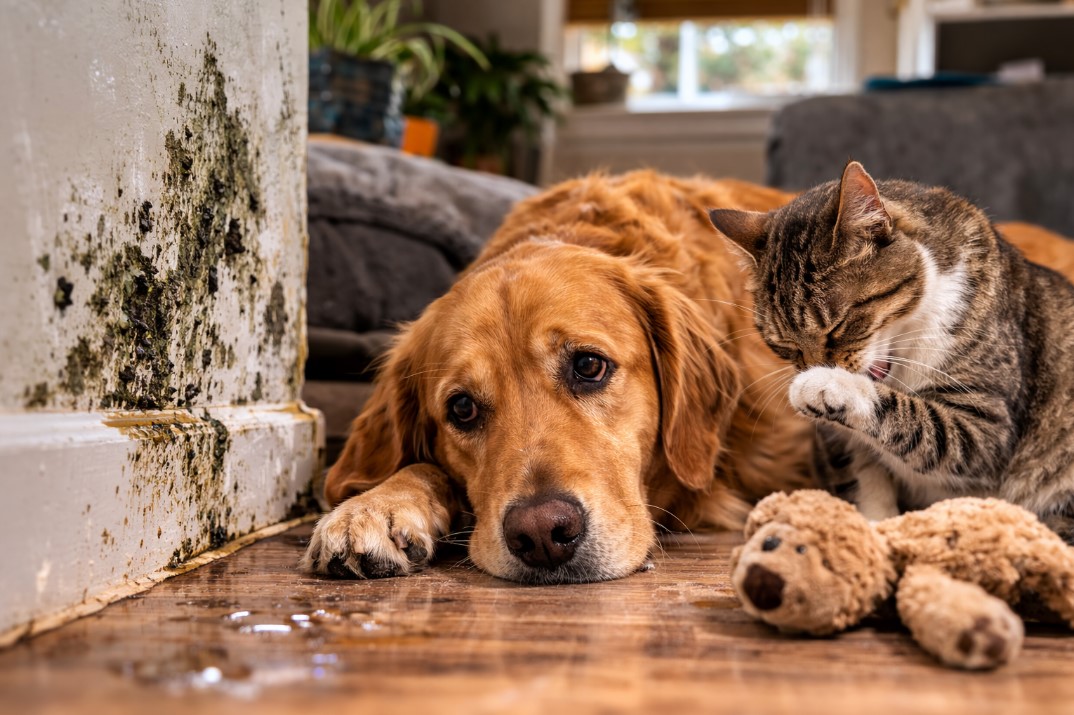
Can Mold Make Your Pet Sick? Warning Signs Every Owner Should Know
Yes, mold can make your pet sick. Pets exposed to mold—whether by inhaling spores, ingesting contaminated food, or coming into contact with moldy surfaces—can develop a range of symptoms, some of which may be serious or even life-threatening. That’s especially relevant for San Diego pet owners: our region’s blend of coastal fog, inland humidity, and older housing stock means mold can lurk in spots your pet loves, often before you notice any problems yourself.
- Mold exposure can make pets sick—symptoms include coughing, sneezing, skin rashes, and digestive upset.
- Dogs and cats are especially vulnerable to mold spores in damp, poorly ventilated homes.
- Watch for warning signs like sudden lethargy, appetite loss, or unexplained respiratory issues.
- Mold-related illness in pets often goes undiagnosed because symptoms can mimic other conditions.
- Promptly address any unexplained pet illness and check for hidden moisture or mold in your home.
- If you suspect mold exposure, consult your veterinarian and inspect your living space for moisture problems.
How Mold Exposure Affects Pets in the Home
Mold can make pets sick because they’re often exposed to it in ways we might overlook—especially here in San Diego, where older homes, condos, and even newer buildings can develop hidden leaks or damp spots after marine layers or “June Gloom.” Pets spend a surprising amount of time in places mold likes to grow: under couches, in basements, along window sills, or curled up in a favorite corner that doesn’t get much airflow.
Here’s what I noticed: my own dog loved napping under the stairs, a spot I rarely checked. When I moved his bed, I found a small patch of greenish mold—likely from a slow leak after a particularly damp spring. Dogs and cats are lower to the ground, so they breathe in spores we might miss, and if they lick their paws or fur after lying on a moldy surface, they can ingest harmful toxins. Even pet food isn’t immune: if you store kibble or treats in damp garages or pantries, mold can grow inside containers or bags.
San Diego’s housing adds its own twist. Coastal properties may have persistent condensation, while inland homes can trap humidity after rain. Condos often have shared walls or hidden plumbing, making it tricky to spot slow leaks. And pets, with their small size and sensitive respiratory systems, can be affected by lower levels of mold than most adults.
Checklist item:
– Inspect pet bedding, feeding areas, and favorite hiding spots for signs of moisture or mold growth.
Common Symptoms of Mold Illness in Pets
Mold symptoms in dogs and cats can be subtle, overlapping with allergies, infections, or even stress. Still, there are some classic warning signs that often pop up—especially if you know what to watch for.
Respiratory issues are common: coughing, sneezing, wheezing, or rapid breathing might be the first clues. I’ve seen cats develop a persistent cough that owners first thought was a hairball problem. On the skin, you might notice itching, redness, hair loss, or sores, sometimes in odd places like the belly or between toes. Digestive symptoms crop up when pets eat moldy food or lick contaminated fur—vomiting, diarrhea, or sudden appetite changes can all indicate trouble.
What surprised me most when I started researching pet health and mold exposure is how behavioral changes can be the first sign. A normally playful dog might seem withdrawn, sleep more, or avoid favorite spots. Cats might hide, act anxious, or groom themselves obsessively. The pattern I keep seeing: sudden changes are more concerning than ongoing, mild symptoms. Mold poisoning in cats, for example, might look like a minor sniffle at first but escalate quickly if exposure continues.
Checklist item:
– Keep a symptom diary and note any sudden or unexplained changes in your pet’s behavior or health.
When to Call the Vet—and What to Tell Them
If your pet is having trouble breathing, collapses, or has repeated bouts of vomiting or diarrhea, don’t wait—seek immediate veterinary care. Even for less dramatic symptoms, it’s smart to involve your vet early if you suspect mold exposure. Many mold-related illnesses in pets go undiagnosed at first because the symptoms mimic other, more common problems.
Let your veterinarian know about any musty smells, recent leaks, or water damage in your home. Be specific: “We had a leak under the kitchen sink last week and now my dog won’t eat” is far more helpful than a vague description. If it’s safe, photos or sealed samples of suspected mold can help your vet narrow things down. I’ve found most vets appreciate a timeline—when symptoms started, what changed at home, and any steps you’ve already taken.
Early intervention really does improve outcomes. Even if mold isn’t the culprit, ruling it out can speed up the search for answers.
Checklist item:
– Prepare a timeline of your pet’s symptoms and any recent home moisture events before your vet visit.
Reducing Mold Risks for Your Pet at Home
Protecting your pet from mold starts with managing moisture. In San Diego, that means paying special attention after foggy mornings, heavy rain, or periods of high humidity. Good ventilation is your friend, especially in bathrooms, kitchens, laundry rooms, and wherever your pet spends the most time.
Quickly cleaning up spills, fixing leaks, and drying wet spots is crucial—mold can start growing within 24–48 hours in a damp environment. Store pet food in airtight, dry containers and check for spoilage every time you scoop out a meal. I’ve made it a habit to wash pet bedding and soft toys in hot water every couple of weeks, especially during “June Gloom” or after a storm.
And this is where it gets interesting: even small steps, like running a dehumidifier or opening windows for a cross-breeze, can make a big difference in pet safety and indoor mold prevention. After a damp spell, I check for new leaks or musty odors—a five-minute walk-through can catch problems before they escalate.
Checklist item:
– Set a reminder to check for leaks or dampness after storms or periods of high humidity.
San Diego-Specific Mold and Pet Health Concerns
San Diego’s climate brings unique challenges for pet owners. Coastal homes, condos, and apartments face near-constant moisture from marine layers and fog. That creates a perfect breeding ground for mold, especially in shaded rooms or those with poor airflow. Inland, homes might not seem as damp—until a heavy rain hits or humidity spikes, sometimes leaving closets or unused rooms feeling clammy for days.
Renters and condo owners have extra hurdles. Some buildings are slow to address leaks or water damage, and shared walls can hide problems for months. If you rent, document any moisture issues and notify your landlord right away. For condo owners, check your HOA’s rules about inspections and repairs—sometimes, what looks like a small leak is actually a building-wide issue.
Pet owners here should be especially vigilant during seasonal changes. After a long foggy stretch or a rogue rainstorm, I always check the corners, under sinks, and around windows—those hidden spots where moisture lingers. The extra effort pays off in peace of mind, knowing your pet isn’t being exposed to something harmful.
Checklist item:
– If renting, request a moisture inspection after heavy rain or if you notice musty odors.
Official Guidance: What Authorities Say About Mold and Pet Health
According to the CDC, indoor mold can trigger allergic reactions and respiratory symptoms in people and animals alike. The American Veterinary Medical Association (AVMA) urges pet owners to keep living spaces dry and well-ventilated, highlighting the increased risk of mold symptoms in dogs and cats living in damp environments.
The ASPCA specifically warns that moldy food can be toxic to pets, and any food with visible mold should be thrown away rather than fed to animals. The EPA stresses that controlling moisture indoors is the single most effective way to prevent mold growth and the health risks that come with it. Finally, the Humane Society of the United States reminds pet owners to seek immediate veterinary care if pets develop sudden illness with possible environmental causes, including exposure to mold.
Sources Note
Research and guidance for this article were drawn from the CDC, AVMA, EPA, ASPCA, and the Humane Society of the United States. This information is for educational purposes only; always consult your veterinarian for diagnosis or treatment if you suspect your pet is ill.
FAQ
1. Can mold in my house make my dog sick?
Yes, dogs can become ill from inhaling, licking, or ingesting mold, especially if they spend time in damp or mold-prone areas.
2. What are the symptoms of mold poisoning in cats?
Look for coughing, sneezing, lethargy, vomiting, diarrhea, appetite loss, or skin irritation—these are common signs of mold illness in cats.
3. How quickly does mold affect pets?
Some pets show symptoms within days of exposure, while others may develop signs gradually. Sudden changes in health are more concerning than chronic, mild symptoms.
4. Is black mold more dangerous for pets than other types?
Black mold (Stachybotrys) may produce toxins that are especially harmful, but all indoor molds can pose health risks to pets.
5. Can pets bring mold spores into the home?
Yes, pets can carry mold spores on their fur or paws if they spend time outdoors, but indoor moisture is usually the main source of mold growth.
6. How do I know if my pet’s illness is caused by mold or something else?
Because symptoms overlap with other illnesses, consult your veterinarian and mention any recent moisture or mold issues at home.
7. What should I do if my pet eats something moldy?
Contact your veterinarian right away, especially if your pet develops vomiting, diarrhea, or unusual behavior after ingesting moldy food.
8. Are certain dog or cat breeds more sensitive to mold?
Breeds with short snouts (like bulldogs or Persians), those with allergies, or pets with weakened immune systems may be more vulnerable to mold symptoms.
CTA Block
- Schedule a professional inspection if you suspect hidden moisture or mold in your home, especially if your pet is showing unexplained symptoms.
- Stay alert to changes in your pet’s health and environment, particularly after heavy rain, leaks, or periods of high humidity.
- Share this information with neighbors, especially if you live in a condo or rental property, to help protect all pets in your community.