San Diego homeowners know that excess moisture is the enemy—whether you’re waking up to foggy coastal mornings or dealing with the dry heat inland. Dishwashers are a kitchen essential, but they have a sneaky way of leaking water in places you might never notice until you see warped floors, swollen cabinets, or a musty smell. In older homes and condos, outdated plumbing or tight installations can up the risk, while renters and apartment dwellers often discover moisture only after the damage is done. If you want to prevent mold, you need to control moisture first. Knowing where dishwasher water hides is your first line of defense.
Why Dishwasher Leaks Matter for San Diego Homes
Dishwasher leaks don’t always announce themselves with a puddle on the floor. Sometimes, all you get is a musty odor or a faint patch of warped laminate. In San Diego, where marine layer humidity and June Gloom can already push indoor humidity above 60%, any extra moisture from a hidden leak can tip the scale toward mold growth. Older craftsman bungalows might have aging pipes, while condos and apartments can suffer from tight kitchens and shared plumbing lines that make leaks harder to spot.
Early detection is key here. Mold can start growing in as little as 24–48 hours if water is trapped in porous materials like drywall, insulation, or cabinetry. The golden rule: moisture source → fast drying (within 24–48 hours) → verify dryness. If you skip a step, you risk structural damage and unhealthy air.
Quick Win: Slide a paper towel under the front edge of your dishwasher before you run a cycle. Check it when the load is done—dampness means you have a problem to investigate.
Hidden Leak Spot #1—Under the Dishwasher
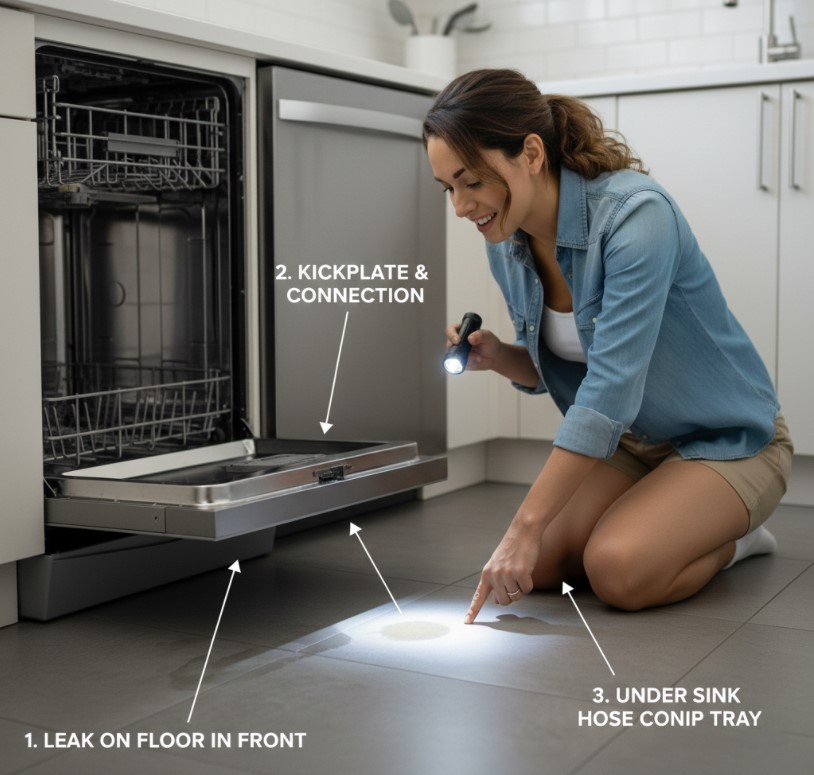
Leaks under the dishwasher are classic “out of sight, out of mind” problems. Most homeowners never look under their dishwasher until there’s already damage. Loose hose connections, worn supply lines, or a cracked door gasket can all let water drip below the appliance. This is especially common in older homes with original plumbing, or rentals where maintenance might be delayed.
Signs to watch for include musty odors after a wash, warped flooring near the unit, or unexplained discoloration on the kickplate. Even if you rent, these clues are worth documenting and reporting.
Here’s a mini-inspection you can do today. Grab a flashlight, a screwdriver, and—if you have one—a moisture meter. Carefully remove the dishwasher kickplate (usually two screws), then shine your flashlight underneath. Look for standing water, soggy insulation, or dampness on the subfloor. If you find moisture, use your moisture meter to see how wet the area is.
Do This Now: If you spot water, immediately turn off the dishwasher and water supply. Soak up standing water with towels, open windows, and start a fan or dehumidifier. The goal is to dry all wet areas within 24–48 hours. If you rent, photograph everything and notify your landlord right away.
Hidden Leak Spot #2—Behind the Dishwasher (Wall & Connections)
The back of your dishwasher is another common hiding place for leaks. Here, the supply line, drain, and sometimes wiring connect to the wall—often out of sight for years at a time. A tiny pinhole leak or a loose fitting can drip water directly into wall cavities or baseboards, creating a perfect environment for hidden mold.
This risk is even higher in San Diego condos and apartments, where shared plumbing lines and tight kitchens make access tricky. Warning signs include peeling paint, soft or bubbling baseboards, or a persistent moldy smell near the dishwasher—even after cleaning.
Inspecting this area is best done with two people. Pull the dishwasher out slowly (after turning off power and water), and use a flashlight and a mirror on a stick to check all connections. Feel the wall for soft spots or bubbling paint, and use a towel to test for moisture along the baseboard. If you have a moisture meter, check the wall and floor behind the appliance.
If you see visible black mold or extensive damage, it’s time to call a professional for mold inspection and post-remediation verification.
Pro Tip: After any water event or suspected leak, always check the wall behind your dishwasher for softness or peeling paint. Early detection here can save thousands in repairs.
Hidden Leak Spot #3—Inside the Cabinet Next to the Dishwasher
Sometimes, dishwasher leaks don’t flow down—they migrate sideways, soaking into adjacent cabinets or drawers. In San Diego’s tightly-fitted kitchens, especially in rentals or classic homes, water can slip through cabinet joints or along the countertop edge. If you open a cabinet and smell mustiness, or notice swelling particleboard or mold at the back, water may be seeping from your dishwasher.
Older cabinets or poorly caulked seams are more vulnerable. Swollen shelves, warped wood, and mold along the back panel are red flags. Even if you don’t see water, a cool or damp feel is a warning sign.
Empty the cabinet next to your dishwasher. Shine a flashlight at the back and run your hand along all surfaces. Check for moisture, and if you have a moisture meter, use it to confirm. Don’t forget to check under the sink as well—sometimes an under-sink leak or a faulty garbage disposal can send water toward your dishwasher area.
Quick Check: Tonight, open the cabinet next to your dishwasher and feel for coolness or dampness, especially at the back and along the floor.
What to Do If You Find a Leak (0–24–48 Hour Guide)
If you discover a dishwasher leak, acting fast is critical to prevent water damage and mold. Here’s a simple timeline to follow:
Immediately (0–1 hour):
Turn off the dishwasher and shut off the water supply (usually a valve under the sink). Unplug the appliance if safe. Blot up any standing water with towels or a wet vac. Open windows and run a fan or dehumidifier to start drying the area.
Within 24 hours:
Remove any wet mats, rugs, or porous materials. Set up additional fans or a dehumidifier—aim for indoor humidity below 60%, ideally 30–50%. Use a moisture meter to check if floors, cabinets, or walls are still damp. Take photos and document everything for your insurance company or landlord.
By 48 hours:
Confirm that all affected areas are completely dry—if anything still feels damp, increase ventilation or call a professional for further drying. If you see visible mold, extensive water damage, or if drying isn’t working, it’s time for expert help. Never ignore slow-drying wet spots—they’re prime mold territory.
Safety Note:
Avoid direct contact with contaminated water or moldy surfaces. For renters, document your steps and notify your landlord promptly to protect your rights and ensure repairs.
Action List:
1. Turn off dishwasher and water supply.
2. Blot up all visible water.
3. Run a fan or dehumidifier in the area.
4. Check moisture levels at 24 and 48 hours—look, touch, and use a moisture meter if you have one.
FAQs About Dishwasher Leaks
What are the most common causes of dishwasher leaks?
Usually, it’s worn door gaskets, loose supply or drain hoses, or clogged filters. Sometimes, improper installation or old plumbing can be the culprit—especially in San Diego’s older homes and condos.
How can I tell if my dishwasher is leaking slowly?
Look for musty odors, warped floors, discoloration around the kickplate, or dampness in adjacent cabinets. Placing a paper towel under the front edge after a cycle is an easy test.
Can hidden dishwasher leaks cause mold?
Yes. If water gets trapped in porous materials and isn’t dried within 24–48 hours, mold can start growing—even if you don’t see standing water.
What should I do if water gets under my cabinets?
Remove wet items, ventilate the area, and dry it thoroughly within 24–48 hours. Use a moisture meter to confirm dryness. If you see mold or extensive damage, call a professional.
How do I dry out water under the dishwasher?
First, turn off the power and water. Remove the kickplate, absorb all water, and run fans or a dehumidifier. Check for hidden moisture; repeat at 24 and 48 hours.
Should I call a plumber or handle a dishwasher leak myself?
Small, surface leaks you can usually handle. For hidden leaks, extensive water, or mold, call a plumber or mold inspector—especially if you live in a condo or rental.
Are dishwasher leaks covered by renter’s insurance?
It depends on your policy. Document everything (photos, notes) and report to your landlord promptly to support any claim.
How can I prevent future dishwasher leaks in my home?
Inspect supply lines annually, replace old hoses, use a moisture meter, and monitor humidity (aim for 30–50%). Never ignore musty smells or warped materials.
Ready to take action?
Do the 10-minute dishwasher leak inspection tonight. Track your kitchen’s moisture levels for the next 7 days (download our free RH log). And if you find a leak, document and photograph everything—you’ll thank yourself if you need to file an insurance claim or notify your landlord.
For more tips, check out our [Ultimate Guide to Moisture Control in San Diego Homes] and [How to Detect Kitchen Leaks Before They Cause Mold]. Protect your home: moisture control today means mold prevention tomorrow.