San Diego homeowners are no strangers to the stubborn presence of musty odors. Whether the culprit is the coastal marine layer during “June Gloom,” the inland summer heat, or the quirks of an older home, musty smells have a way of returning soon after a thorough cleaning. The real issue often hides beneath the surface: persistent moisture trapped where it can’t be seen. Understanding how to find and address these hidden moisture reservoirs is essential for keeping any San Diego home—beach bungalow, inland condo, or rental—fresh, safe, and mold-free.
Why Cleaning Alone Doesn’t Solve Musty Odors
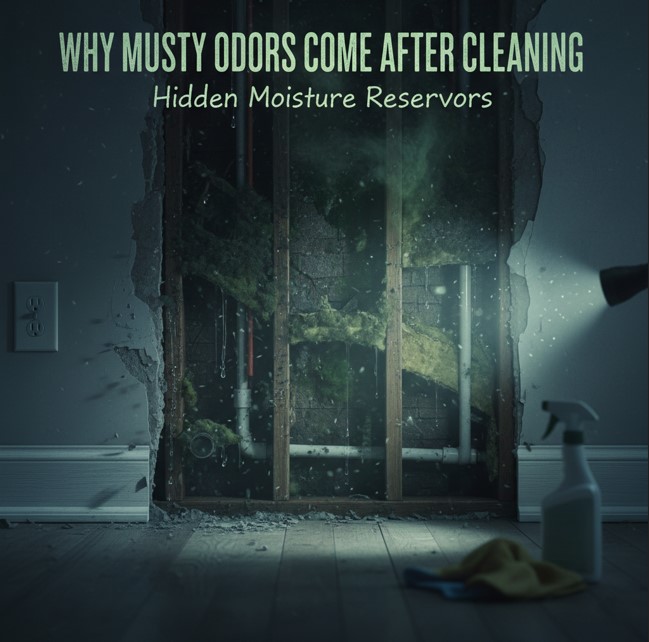
It’s easy to assume that a deep clean will banish musty odors for good. In reality, cleaning only tackles what’s visible. Wiping away surface mold or mopping up a spill may temporarily remove odors, but if moisture remains trapped inside walls, under floors, or in HVAC ducts, those smells inevitably return.
Musty odors are a warning sign of ongoing microbial activity, typically fueled by dampness that lingers out of sight. San Diego’s unique blend of coastal fog, marine layer humidity, and scorching inland heat can compound the problem. For example, a kitchen leak might appear resolved after a quick mop-up, only for the musty smell to reappear days later—often because the subfloor or drywall remains damp.
Do this now: After cleaning any water spill or area with a musty odor, check for lingering dampness. Use a moisture meter, or press your hand to baseboards, carpets, and walls. If they feel cool or damp, there’s still hidden moisture.
Where Moisture Hides—Common Reservoirs in San Diego Homes
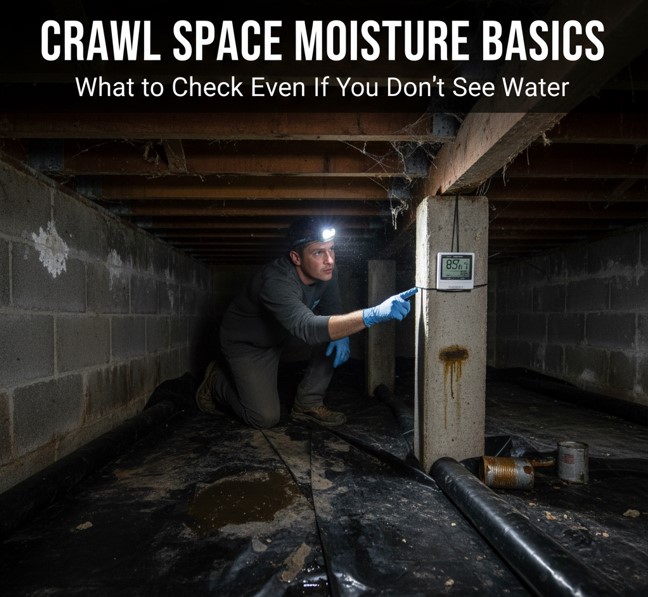
Every home has potential hiding spots for moisture. In San Diego, the most common reservoirs include areas beneath flooring, behind walls, inside cabinets, within HVAC ductwork, crawl spaces, attics, and around any plumbing.
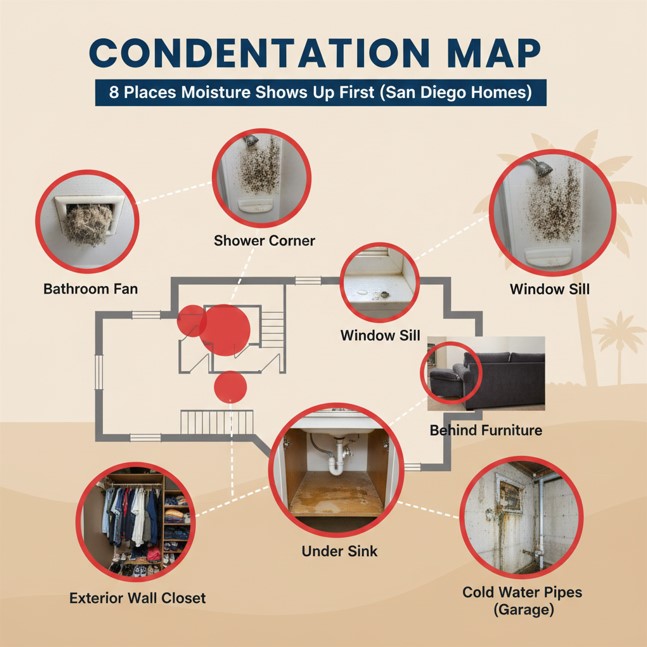
Coastal homes are especially vulnerable to attic condensation (thanks to the marine layer), window sills that collect moisture, and closets on exterior walls where cool air meets warm. Condos and apartments have their own challenges, such as shared plumbing, slab leaks, and older, underpowered bathroom fans that leave humidity lingering after showers.
Red flags include persistent musty odors after cleaning, warped or cupped floorboards, discolored drywall, bubbling paint, cold spots on walls or floors, and rooms that feel sticky or humid even when the weather outside is dry.
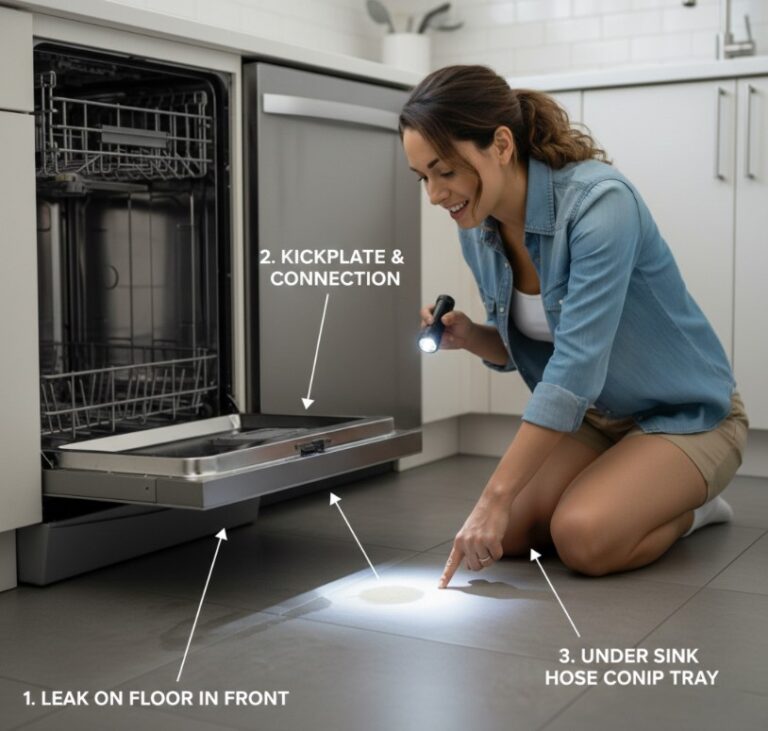
Do this now: Take ten minutes for a “touch and sniff” inspection. Check the floor around sinks, tubs, and washing machines. Sniff at baseboards and carpet edges for musty or earthy scents—these are clues to hidden moisture.
Quick-Action Timeline: What to Do After a Leak or Water Event
When a leak strikes, time is of the essence. Mold can start growing in as little as 24–48 hours if materials stay wet, so rapid response is critical.
0 hours: Immediately stop the source—shut off the water supply if possible. Move furniture and porous items away from the wet area. Blot and towel-dry any standing water.
Within 24 hours: Set up fans and, if available, run a dehumidifier to speed drying. Open windows if outside humidity is low. Lift carpeting and check underneath. Move furniture to allow airflow. For HVAC leaks, inspect the condensate line for clogs and ensure sweating AC ducts are insulated.
By 48 hours: Use a moisture meter to check walls, floors, and baseboards for lingering dampness. If areas are still wet, or if you see visible mold, bubbling paint, or warping, call a licensed professional—especially in condos or rentals with shared plumbing.
If the water involved is from a toilet leak, sewage backup, or is otherwise contaminated, do not attempt cleanup yourself—call a certified water damage remediator.
Do this now: Document every step. Take photos of the affected area, the drying setup, and any visible damage. Keep notes for your insurance or, if renting, to notify your landlord or property manager promptly.
How Ventilation and Condensation Fuel Hidden Moisture
Everyday activities—cooking, showering, laundry—add significant moisture to indoor air. In coastal San Diego, the marine layer keeps humidity high, and older homes with single-pane windows and poor insulation are especially prone to condensation on windows and walls. Inland, high temperatures mean air conditioning runs all day, sometimes leading to sweating ducts or HVAC condensate line clogs.
Poor ventilation traps this moisture, creating the perfect environment for hidden reservoirs. Many older bathrooms, for example, lack exhaust fans or have undersized units that can’t keep up with daily showers. In condos, exhaust fans may vent into attics instead of outside, allowing moisture to accumulate in insulation or rafters.
Simple fixes include always using kitchen and bathroom exhaust fans, making sure dryer vents are clear and lead outside, and adding weatherstripping to reduce drafts. Upgrading to a higher-CFM, ENERGY STAR–rated bathroom fan (look for at least 50–80 CFM for most spaces) can make a big difference.
Do this now: Place a hygrometer in the most humid part of your home—often a bathroom, laundry area, or near windows. Track relative humidity for a week. If it stays above 50%, increase ventilation or use a portable dehumidifier to keep indoor humidity in the EPA-recommended 30–50% range.
Moisture Control = Mold Prevention: Verifying Your Home is Truly Dry
The ultimate way to keep musty odors and mold away is to ensure your home is genuinely dry. If mold or musty smells come back after cleaning, moisture is still present.
Verification means more than a quick feel. Use a moisture meter to check suspect areas—drywall, baseboards, carpet, and insulation should all read dry. There should be no cold or damp spots, and indoor humidity should remain below 50%. If musty odors persist, visible mold appears, or you’re dealing with shared structures (such as in a condo or apartment), professional help is often needed. Larger or recurring problems may warrant a mold inspection, post-remediation verification, and thorough insurance documentation.
San Diego’s slow-drying, foggy microclimates often mean fans or dehumidifiers need to run longer than in other regions, especially in older homes or those near the coast.
Do this now: After any leak or cleaning session, confirm all previously wet areas are dry to the touch and odor-free. Use a moisture meter if possible, and recheck daily for several days to catch any lingering moisture.
Frequently Asked Questions
Why do musty odors come back after I clean my house?
Musty smells often mean hidden moisture remains. Cleaning removes surface dirt, but trapped dampness in walls, floors, or insulation allows odors (and mold) to return.
How can I find hidden moisture in my San Diego home?
Check for cold, damp patches on walls or floors, persistent odors, or warped floorboards. Use a moisture meter for accurate readings, especially in high-risk areas.
What are the signs of moisture problems behind walls or under floors?
Look for bubbling paint, stained drywall, warped wood, or musty smells that linger after cleaning.
What’s the fastest way to dry out after a leak?
Act immediately: stop the leak, blot up water, use fans and a dehumidifier, and check hidden areas. Dry all materials fully within 24–48 hours to reduce mold risk.
Do I need a moisture meter for my home?
While not essential, a moisture meter is a valuable tool for homeowners, especially after leaks or in older homes. Affordable options are available at hardware stores.
When should I call a professional for musty smells or water damage?
If you find visible mold (over 10 square feet), can’t dry areas within 48 hours, or live in a condo/rental with shared systems, call a licensed pro for inspection and post-remediation verification.
How can I improve ventilation to prevent moisture buildup?
Use exhaust fans every time you cook or shower, ensure vents lead outside, and consider upgrading to higher-CFM models. In coastal homes, monitor humidity and use a dehumidifier if needed.
Should I worry about musty smells in a rental or condo?
Yes—document all issues, notify your landlord or HOA, and keep records for insurance or repairs, as shared plumbing or walls can hide leaks that affect multiple units.
Next Steps:
– Complete the 10-minute “touch and sniff” check in your home’s trouble spots today.
– Track indoor humidity with a hygrometer for one week to confirm you’re in the safe 30–50% range.
– Document any leaks, musty smells, or visible damage for your landlord or insurance, and schedule a professional inspection if problems persist.
For more, see [Moisture Control in San Diego Homes], [Common Causes of Hidden Leaks in Condos & Apartments], and [First 48 Hours: Emergency Water Damage Steps].