Does Your Kid’s Sippy Cup Have Mold? How to Spot and Prevent It
Yes, your kid’s sippy cup can develop mold—especially in hidden spots like valves, straws, and seals—if moisture lingers after cleaning or cups are left assembled while damp.
For families in San Diego, our coastal climate, marine layer, and even those inland heat spells can mean extra moisture in the air or inside our homes. That makes it easier for mold to thrive in everyday items, including your child’s sippy cup. Older homes and condos with less ventilation may be especially at risk, so knowing how to spot and prevent mold is key for protecting your child’s health.
- Mold often grows in sippy cups when moisture is trapped in hard-to-clean parts.
- Check valves, straws, and rubber seals for black, green, or fuzzy spots.
- Wash and dry all cup parts thoroughly after each use.
- Disassemble cups completely before cleaning and storage.
- Replace sippy cups with visible mold or persistent odors.
- San Diego’s humidity and marine layer can increase mold risk in baby items.
Why Mold Grows in Sippy Cups—And Why San Diego Homes Are Prone
Mold grows in sippy cups because it needs moisture, warmth, and a bit of organic material—like leftover milk or juice—to thrive, and San Diego’s coastal weather often provides just the right conditions for that.
If you’ve ever noticed how those little rubber seals or twisty straws seem harder to dry, you’re not alone. Sippy cups are cleverly designed to prevent spills, but that also means they have lots of nooks and crannies where water gets trapped after washing. When assembled while still damp, these parts become a haven for invisible moisture—and mold loves that.
San Diego’s unique weather plays a bigger role than you might expect. The persistent marine layer and those “June Gloom” weeks mean higher indoor humidity, even when it seems dry outside. Coastal fog can creep indoors, and if you’re in a condo or an older house, less ventilation lets moisture linger. And this is where it gets interesting: even inland areas can have spikes in humidity during heat spells, so you’re not necessarily off the hook if you’re further from the beach.
What surprised me most when I started looking into this is that the real culprit isn’t just the leftover milk—it’s the moisture you can’t see. A cup that’s washed but not fully dried before reassembly is at high risk, no matter how clean it looks. That’s why mold in cups is usually a symptom of a deeper moisture problem.
Checklist item:
After washing, shake out all cup parts and let them air-dry fully before reassembly.
How to Spot Mold in Your Child’s Sippy Cup
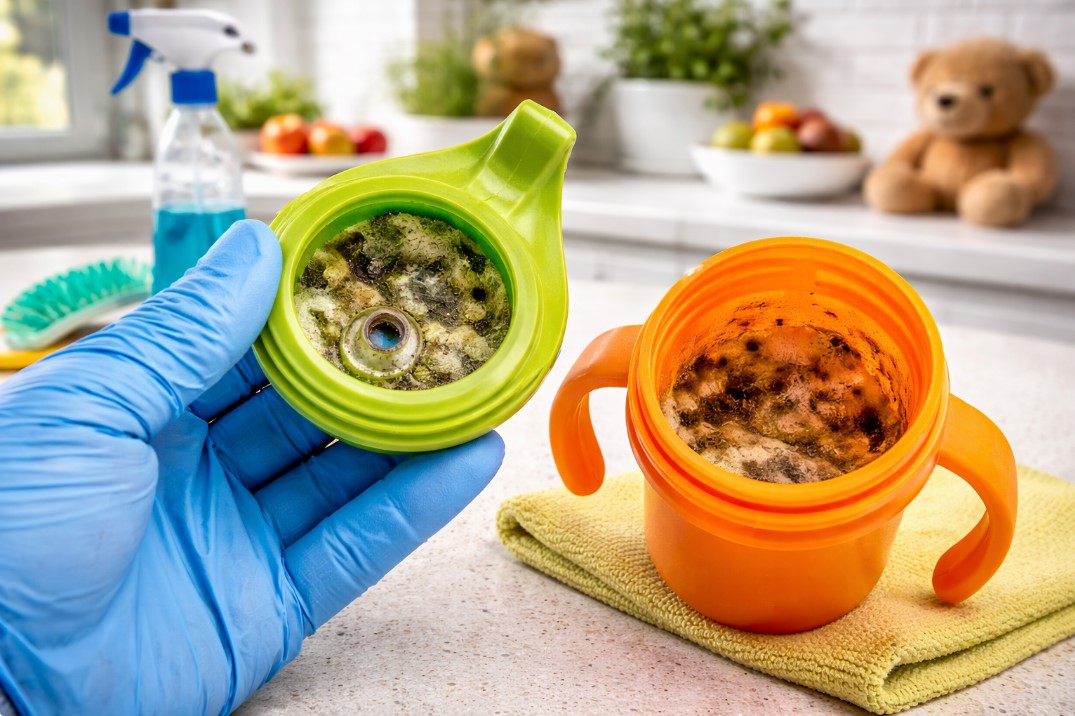
You’ll usually see mold in a sippy cup as black, green, orange, or white fuzzy spots—but it isn’t always that obvious, especially in the early stages.
A quick sniff is often your first clue; a persistent musty or sour odor can mean something’s hiding where you can’t see. Look closely under valves, inside straws, beneath the silicone seals, and even inside the lid. Sometimes you’ll find slimy residue or discoloration that doesn’t scrub away easily. I’ve found that some molds start out nearly invisible, just a thin film or a faint off-color patch, before they become fuzzy or obvious.
For San Diego parents, this can be a bigger issue during foggy or humid weeks, thanks to our higher humidity. That moisture speeds up mold growth, so it pays to check more often during “June Gloom” or when you’re running the AC less.
The pattern I keep seeing is that the spots often show up in areas you wouldn’t expect—like deep inside the straw or right under the valve where the brush doesn’t always reach. Make it a habit to look for anything unusual, even if it’s not fuzzy yet.
Checklist item:
Inspect all parts of your child’s cup closely at least once per week, especially after illness or hot weather.
Cleaning and Sanitizing Sippy Cups—What Really Works
The best way to clean sippy cup parts—and prevent mold in sippy cups—is to take everything apart and clean every piece after each use, especially in a place like San Diego where humidity can be sneaky.
Start by fully disassembling the cup. Don’t just rinse it with the lid on; take out valves, straws, and seals. Use hot, soapy water and scrub each part with brushes made for bottles or sippy cups. I keep a set of small brushes on hand specifically for those hard-to-reach crevices. If you spot any stubborn residue or stains, a baking soda paste or a soak in white vinegar can help loosen things up.
For homes with dishwashers, put all parts on the top rack and make sure they’re spaced out for airflow. This helps with both washing and drying, cutting down on trapped moisture. Just don’t rush to reassemble—let every part dry completely. If you’re in a condo or rental with less air movement, try drying cup parts near an open window or under a fan.
If you ever notice that musty smell or see visible mold, and it doesn’t go away after a thorough cleaning, it’s time for a new cup. Some plastics and silicone just hold on to mold, even when they look clean.
Checklist item:
Keep a set of small brushes on hand to reach inside straws, valves, and crevices.
Preventing Mold in Sippy Cups—San Diego Home Edition
To prevent mold in sippy cups, you need a mix of regular cleaning, smart storage, and good moisture management—especially in San Diego’s coastal and older homes.
First, always store cups with the parts separated so air can circulate. In a humid kitchen or a condo with small storage space, that might mean setting pieces on a clean towel or a drying rack instead of snapping them back together right away. If you’ve got a window or a kitchen exhaust fan, use it during and after washing to move damp air outside.
Don’t leave drinks sitting in cups for hours, especially milk or juice. Bacteria and mold love those sugary leftovers. For families in coastal areas or older buildings where air can get stuffy, a small portable dehumidifier can make a big difference. They’re not too expensive (think $40–$100 for a small unit) and can help dry out kitchens or storage areas.
If you’re renting or living in a condo, you might have less control over ventilation, but you can still run fans or open doors after washing up. Replace any old cups or worn rubber seals—they tend to trap moisture and can become impossible to fully clean.
What surprised me most was how much faster mold can return if you skip even a single step, especially in a moist environment. Prevention is about staying just one step ahead of the moisture.
Checklist item:
Set a calendar reminder to deep-clean and inspect all children’s cups and water bottles every two weeks.
What to Do If You Find Mold in Your Child’s Sippy Cup
If you discover mold in your child’s sippy cup, don’t panic—just stop using the cup right away and dump out any leftover drink.
Take the cup apart and wash every piece with hot, soapy water; scrub thoroughly. If there’s still visible mold or a lingering odor after cleaning, it’s safer to replace the cup. Sometimes, even after a deep clean, the material stays contaminated. For parents in San Diego, where humidity can be high, don’t forget to check nearby items like bottle brushes or drying racks—they can pick up mold too.
Keep an eye on your child for any signs of coughing, stomach upset, or allergies, and call your pediatrician if you have any concerns. Most brief exposures to small amounts of mold aren’t likely to cause serious health problems, but it’s always best to check if you notice symptoms.
If you’re renting or in a condo, be sure to document any persistent moisture problems and notify your landlord if you suspect a bigger issue with humidity or leaks.
Checklist item:
Call your child’s doctor if you notice symptoms after possible mold exposure.
Official Guidance
Major health and safety organizations offer some clear, research-backed advice for preventing mold in sippy cups and other baby bottles:
- Rinse and clean sippy cups and bottles after every use to prevent mold growth.
- Disassemble all parts before washing to reach hidden areas (CDC).
- Air-dry thoroughly before reassembly and storage (CDC and AAP).
- Replace any cups with visible mold or lingering odors (AAP).
- Watch for signs of illness in children after accidental mold ingestion (CDC).
- Increase ventilation in kitchens and storage areas to reduce indoor humidity (EPA Mold Guidelines).
Sources Note
- Information sourced from the CDC, American Academy of Pediatrics (AAP), EPA, and HealthyChildren.org.
- This article is for informational purposes only; consult a pediatrician or environmental specialist for confirmed issues or persistent mold problems.
FAQ
How do I know if my child’s sippy cup has mold?
Check for black, green, orange, or fuzzy spots, slimy residue, or a persistent musty smell—especially in hidden areas like valves, straws, and under silicone seals.Is mold in sippy cups dangerous for kids?
Small amounts are unlikely to cause serious harm, but mold may be linked to allergic reactions or stomach upset. Always consult your pediatrician if your child shows symptoms.How often should I clean my kid’s sippy cup to prevent mold?
Disassemble and wash all parts after every use, and do a thorough inspection at least once a week.Can I use bleach or vinegar to clean a sippy cup with mold?
Vinegar is generally safe for soaking parts, but avoid bleach on baby items unless the manufacturer says it’s safe. Rinse thoroughly after cleaning.What are the best sippy cups for preventing mold?
Look for cups with fewer parts and wide openings, which are easier to clean and dry. Brands that sell replacement valves and seals can also help.Why does mold keep coming back in my child’s cup?
Persistent moisture, poor drying, or worn-out seals can lead to recurring mold. Make sure every part fully dries, and replace damaged components.Are certain types of drinks more likely to cause mold in cups?
Yes—milk, juice, and other sugary drinks leave residues that feed mold. Water is less likely to cause issues but cups still need regular cleaning.How can I dry sippy cup parts quickly in a humid San Diego home?
Use a fan, open window, or run an exhaust fan in the kitchen. A portable dehumidifier can also help in areas with poor air flow.
Ready for a Mold-Free Cup?
- Inspect your child’s sippy cups today—don’t forget the straws and valves.
- Swap out any cups showing stains or stubborn odors for a fresh, mold-free start.
- If you’re concerned about moisture or recurring mold in your home, consider improving ventilation or consulting a local specialist.