What Can I Do If I Have Mold in My Apartment? Steps to Remove It Fast
If you find mold in your apartment, focus on stopping moisture first, clean up small patches safely, and contact your landlord promptly. Mold is a warning sign—solve the moisture to fix the real problem.
Mold is a common headache for San Diego renters and homeowners, especially with our coastal fog, “June Gloom,” and older buildings that may trap moisture. Whether you live near the beach or further inland, fast action can limit damage and protect your health. Understanding why mold grows here—and what steps to take—can make all the difference.
Quick Answer Block
- Identify and stop the source of moisture immediately.
- Document mold with photos and notify your landlord in writing.
- Clean small areas with protective gear using soap and water—never mix bleach with other cleaners.
- Increase ventilation and use fans or dehumidifiers to dry the area.
- For larger or hidden mold, contact a certified mold professional.
- If you rent, review your tenant rights under California law.
Why Mold Grows in San Diego Apartments (Core Principle)
Mold in San Diego apartments grows because excess moisture creates the perfect environment—think leaks, condensation, or poor airflow, especially during our long stretches of fog or “June Gloom.”
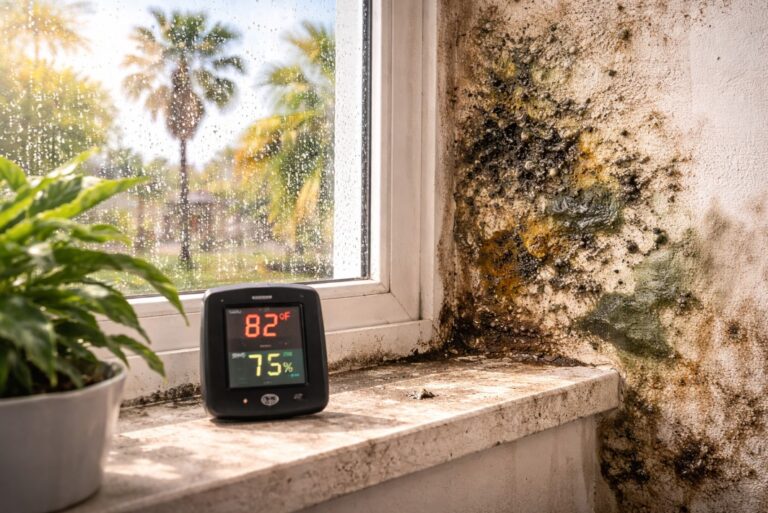
San Diego’s unique climate makes apartments and condos especially vulnerable. The marine layer and coastal fog can boost indoor humidity, even if you rarely run your humidifier. Living closer to the coast, you might notice your windows fogging up or bathroom mirrors taking forever to clear. Inland, you could be dealing with sudden summer thunderstorms or older HVAC systems that don’t remove enough moisture.
Older buildings, which are common in San Diego, often have outdated plumbing or ventilation. That means a minor drip under the sink or a bathroom fan that barely works can lead to persistent dampness—giving mold exactly what it needs. The pattern I keep seeing is that tenants often spot mold near windows, under sinks, or around AC units, all places where condensation and leaks are likely.
Check for leaks or condensation around windows, sinks, and ceilings—report any water issues within 24 hours.
First Steps When You Discover Mold
If you discover mold in your apartment, act quickly within the first 24 hours to limit health risks and prevent property damage.
First, don’t disturb or touch large patches. Mold spores can become airborne with even gentle brushing. Try not to breathe in any dust from the area. If the mold is in a small spot—say, under a bathroom sink or along a window—close the door to isolate the space and cover any vents nearby.
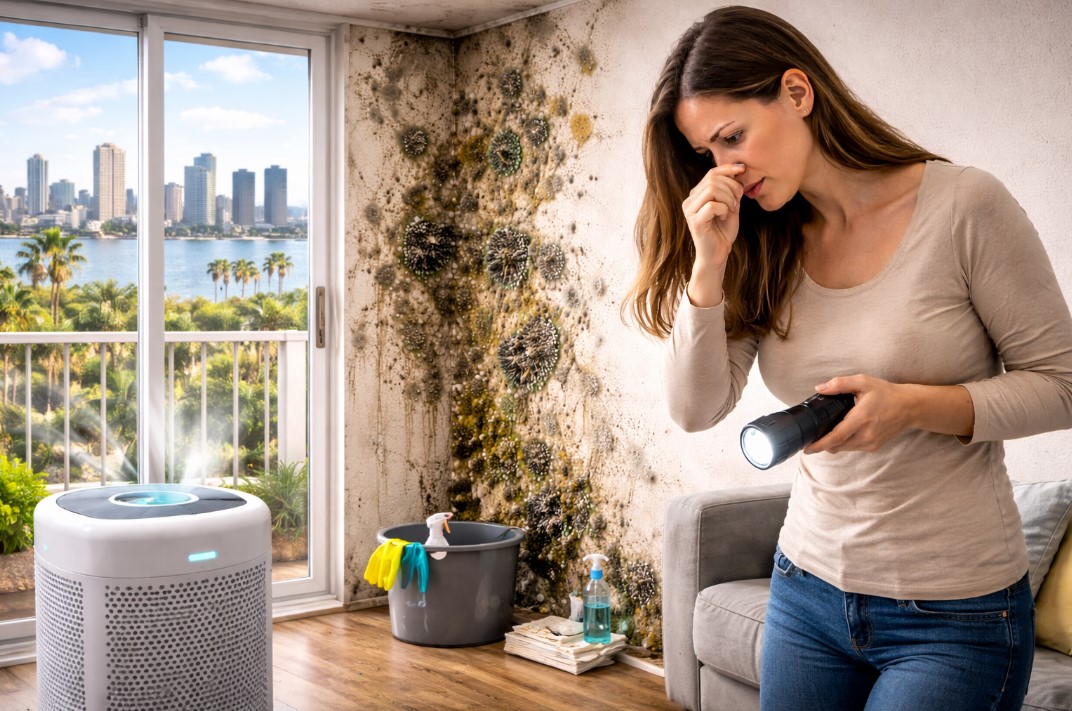
Wear disposable gloves and at least an N95 mask if you’re going to inspect or clean a small area. Take clear, well-lit photos for documentation. You’ll need these for your records and to communicate with your landlord or property manager.
What surprised me most is how many renters forget to document the problem before cleaning up—without photos, it’s hard to show the scope or prove how quickly you reported it. So snap pictures before you touch anything, even if you plan a quick clean.
Email your landlord or property manager with photos and a written description within 24 hours.
How to Remove Small Amounts of Mold Yourself
You can remove small amounts of mold yourself—generally, anything under about 10 square feet—if you follow safe practices and work quickly.
Start by opening windows and doors to increase airflow. If possible, set up a fan facing out an open window to help push any airborne spores outside. Don’t direct fans across the mold itself, or you might spread spores through your apartment.
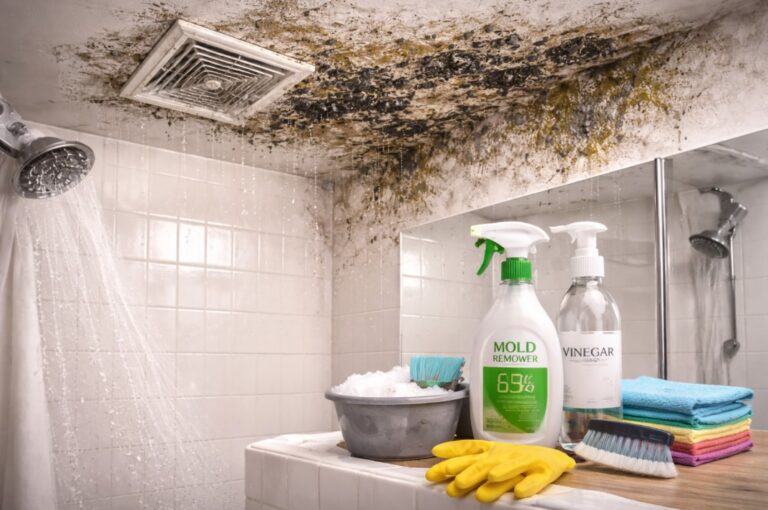
Clean hard, non-porous surfaces (such as tile, glass, or metal) with mild soap and water or a store-bought cleaner that’s labeled for mold. Avoid using bleach on porous surfaces like drywall or wood, as it doesn’t penetrate deeply and can make the problem worse. Never mix cleaning chemicals—especially not bleach and ammonia, which create toxic fumes.
If you find mold on porous materials like carpet, drywall, or ceiling tiles, these usually need to be discarded. Trying to save them can leave hidden spores behind.
After cleaning, the most important step is drying. Mold thrives on dampness, so use a portable fan or dehumidifier to dry the area thoroughly for at least 24–48 hours. In San Diego, a basic dehumidifier runs about $40–$200, depending on size. Set the humidity target below 60%—ideally 30–50%, if your device allows.
Set up a portable fan or dehumidifier in the cleaned area for at least 24–48 hours.
When to Call a Professional (and What to Expect)
Large, hidden, or recurring mold problems in your apartment aren’t a DIY project—call a certified professional if the area is bigger than 10 square feet, the source is unclear, or you suspect mold inside walls, HVAC, or after major leaks.
Professionals in San Diego typically have certifications from organizations like the IICRC or a valid California contractor’s license. They’ll assess the situation, use containment barriers to prevent mold spreading, and deploy specialized equipment—such as air scrubbers and moisture meters—to safely remove both visible and hidden growth.
If mold keeps coming back, or you notice a musty smell but can’t see the source, this usually signals a deeper moisture problem. Professionals can pinpoint leaks behind walls or in ceilings—especially important in older San Diego condos or rentals, where hidden plumbing issues are common.
Here’s what I noticed: reputable remediation companies will provide you with a written estimate and proof of insurance before starting any work. Don’t be afraid to ask.
Request written estimates and proof of insurance from any mold remediation company.
Protecting Your Rights as a Tenant in California
Your rights as a tenant are protected under California law, and landlords are required to keep your apartment habitable—which includes fixing leaks and addressing mold issues promptly.
As a renter, you need to notify your landlord or property manager about any water or mold problem as soon as you spot it. Written notice (email is best) is essential. This gives your landlord the opportunity—and legal obligation—to address the issue. In San Diego, if your landlord ignores the problem, you can contact city or county housing resources for help.
You’re also expected to allow reasonable access for repairs. Don’t delay or block scheduled inspections or fixes, as this can affect your legal protections. If your landlord doesn’t respond, the California Department of Public Health offers guidance on next steps, and the San Diego County Environmental Health Department can help with unresolved cases.
Keep all communication in writing—emails, texts, repair requests, and photos. This documentation is your best tool if you need to escalate the issue or pursue legal options.
Save all emails, texts, and photos related to your mold/moisture issue for your records.
Official Guidance on Mold Removal and Apartment Safety
- Use protective gloves, goggles, and an N95 mask when handling or cleaning mold. (EPA Mold Guidelines)
- Fix plumbing leaks and dry all items completely to control mold growth. (EPA Mold Guidelines, CDC Mold FAQs)
- Clean up small areas of mold (less than 10 sq. ft.) yourself if you’re healthy; call professionals for larger problems. (EPA Mold Guidelines)
- Never mix bleach with ammonia or other cleaners; use soap and water for most jobs. (EPA Mold Guidelines)
- If you rent, report persistent mold to your landlord in writing and keep records. (California Department of Public Health)
- Do not attempt to clean mold caused by sewage or floodwater yourself. (CDC Mold FAQs)
Sources Note
Organizations Used:
Environmental Protection Agency (EPA), Centers for Disease Control and Prevention (CDC), California Department of Public Health (CDPH).
Disclaimer:
This information is for general guidance only—if you suspect a serious mold or moisture problem, consult a qualified specialist.
FAQ
1. How do I get rid of mold in my San Diego apartment fast?
Act immediately to stop the source of water, increase ventilation, and clean small areas with soap and water. Dry the area thoroughly and notify your landlord right away. For large or hidden problems, call a professional.
2. What causes mold in apartments near the coast?
Apartments near the San Diego coast are prone to mold due to higher humidity from the marine layer and frequent fog, which create condensation on windows and walls. Poor ventilation can make these issues worse.
3. Can I break my lease if my landlord won’t fix mold problems?
In California, mold that makes an apartment uninhabitable may give you grounds to break your lease. Always document the problem and communication with your landlord first, and consult tenant resources before taking further steps.
4. How much mold is dangerous in an apartment?
There’s no set “safe” amount, but any visible mold should be addressed. Large patches (over 10 square feet), hidden mold, or mold after flooding may be linked to health concerns and require professional removal.
5. Is black mold common in older San Diego condos?
Black mold (Stachybotrys chartarum) isn’t uniquely common, but older San Diego condos with leaks, poor drainage, or ventilation problems can develop it if dampness is persistent.
6. Who pays for mold removal in California rentals?
Generally, landlords are responsible for fixing leaks and removing mold caused by building issues. Tenants may be responsible if they cause the moisture (for example, not ventilating bathrooms).
7. What are signs of hidden mold behind walls or ceilings?
Musty odors, bubbling or peeling paint, stains, or ongoing allergy-like symptoms may indicate hidden mold. If you notice these, request an inspection from your landlord.
8. How can I prevent mold from coming back after cleaning?
Control moisture—fix leaks, use fans or dehumidifiers, and keep humidity below 60%. Regularly check problem areas, especially after “June Gloom” or storms.
Next Steps
- Schedule a moisture inspection if you can’t find the source of dampness.
- Contact your landlord or property manager as soon as you spot mold or leaks.
- Get a professional opinion if the mold covers more than a small area or keeps returning.