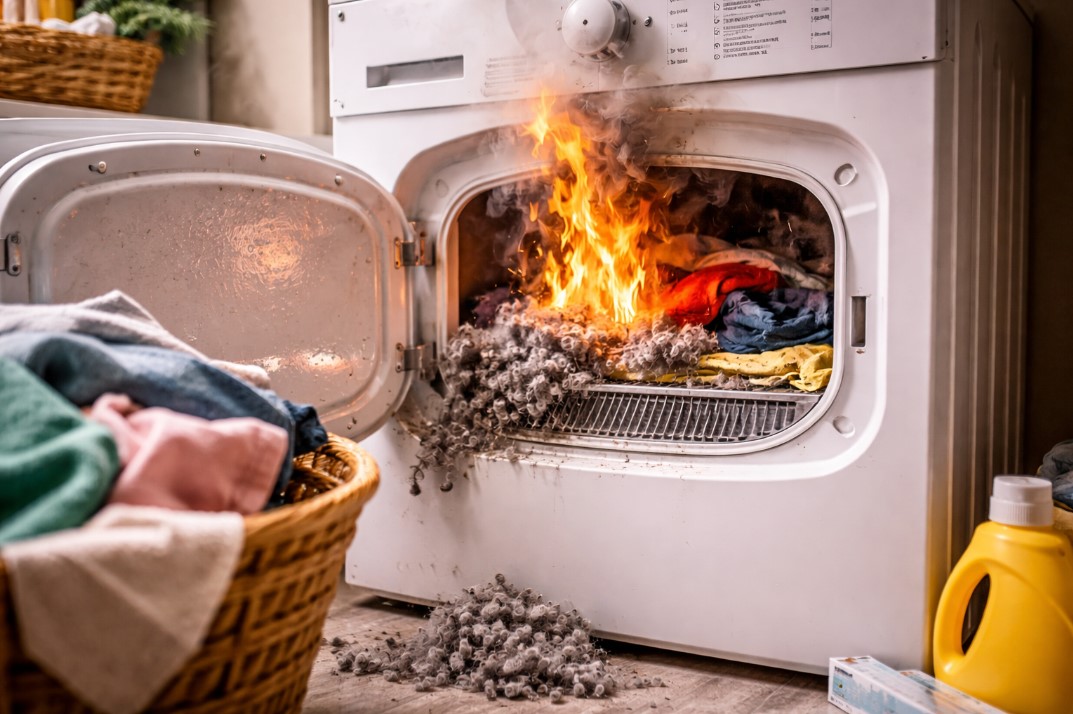
Why Are Clothes Dryers a Fire Hazard? Causes, Risks & How to Prevent Them
Clothes dryers are one of the most common fire hazards in homes because lint buildup, clogged vents, and poor installation can easily cause overheating and spark a fire. If you live in San Diego, you might notice frequent dampness from coastal fog, “June Gloom,” or marine layers—meaning your dryer gets heavy use throughout the year. Many local homes, condos, and rentals are older or have tight indoor spaces, so it’s especially important to keep your dryer in safe working order. A little vigilance and regular cleaning can help protect your home and family from a dangerous (and preventable) fire.
- Lint buildup in dryer vents is the leading cause of dryer fires.
- Blocked vents prevent heat and moisture from escaping, causing overheating.
- Flammable lint can ignite from high temperatures, sparks, or mechanical failure.
- Poor installation or damaged ducts increase fire risk.
- Regular cleaning and inspection of vents and lint traps help prevent fires.
- Overloaded dryers and lack of airflow increase risk in condos and rentals.
What Makes Clothes Dryers a Fire Hazard?
Clothes dryers are a fire hazard because lint is highly flammable and tends to accumulate inside the machine and its venting system, especially during San Diego’s humid spells. When lint collects in the filter, vent hose, or exhaust duct, it restricts airflow. This causes the dryer to overheat—potentially reaching temperatures where lint can ignite with just a small spark or even from the heat alone.
Here’s what I noticed: Electric or mechanical failures, such as a faulty thermostat or worn-out motor, can also trigger ignition if there’s already a blanket of lint waiting to catch. If your dryer isn’t ventilating properly—maybe the vent hose is kinked behind the machine, or the exterior vent flap is stuck closed—you’re doubling down on the danger.
A basic but crucial step is to inspect and clean the lint trap after every load. It only takes a few seconds but goes a long way in preventing fires. For deeper cleaning (like removing lint from inside the dryer cabinet or vent hose), always unplug the machine first to avoid electrical shock or injury.
Common Causes of Dryer Fires in San Diego Homes
Dryer fires in San Diego often trace back to unique local factors—many homes here are decades old, with long, winding, or hard-to-access dryer vent runs. In condos and apartment buildings, venting might snake through shared walls or ceilings, making it tough to know when a blockage forms. The pattern I keep seeing is that coastal fog and the marine layer mean more damp laundry, and more dryer usage overall—so lint builds up faster than you might expect.
Rental units sometimes go months (or years) without a thorough vent check, especially if it’s unclear who’s responsible for maintenance. And inland, where heat waves can mean daily laundry cycles, you’re putting extra wear and tear on your machine and its venting.
You’ll want to schedule a professional dryer vent cleaning at least once a year—more often if you notice performance issues. If your dryer vent is long, routed through ceilings, or hard to reach, this is a job for a pro with the right equipment. For straightforward, short ducts, you might be able to handle it yourself with a vent brush kit (these run $20–$40 at hardware stores). Condo owners, check your HOA rules before tackling any maintenance—some require professional service for shared venting.
Warning Signs Your Dryer Could Be a Fire Risk
You don’t have to wait for smoke to know there’s a problem. In San Diego homes, some warning signs are easy to spot if you know what to look for. If your clothes are taking much longer than usual to dry, or if the dryer itself feels hotter than normal (or the laundry room feels uncomfortably warm), it’s time to investigate.
What surprised me most was how often people notice a burning smell or see lint collecting behind or under the dryer but don’t connect it to fire risk. If you spot extra lint near the machine, or the vent outside looks blocked, take it seriously. A lint screen that’s never dirty can also be a red flag—it may mean lint is bypassing the filter and clogging the vent system instead.
Make it a habit to check your dryer vent exhaust for strong airflow every month. Step outside while the dryer is running; you should feel steady, warm air coming from the vent. If airflow is weak or nonexistent, stop using the dryer and address the blockage within 48 hours. If you notice any burning smells or smoke, discontinue use immediately and call a professional.
How to Prevent Dryer Fires: Practical Steps
Preventing dryer fires is straightforward, but it does require consistency. Start by cleaning the lint trap before every load—this single step removes the majority of flammable debris. Regularly check your vent hose for kinks, crushing, or visible lint buildup. Avoid overloading your dryer, and always use the correct heat and time settings for your fabrics.
Never run your dryer when you’re asleep or out of the house. If something does go wrong, you want to be present to catch it early. Replace any plastic or foil vent hoses (which can melt or catch fire) with rigid or semi-rigid metal ductwork, as recommended by the NFPA. Metal ducts resist heat and contain any sparks much better.
If you live in a multi-unit building, check with your property manager or HOA about who’s responsible for vent cleaning. Some buildings have shared vent systems that can develop blockages far from your own unit. For visible lint removal (like cleaning the vent cover), you can DIY. For a full duct cleaning, or if you can’t access the entire vent run, call a professional.
Add an annual dryer vent inspection to your home maintenance calendar—set a reminder in your phone or planner. This small routine can prevent costly damage and keep your family safer.
What to Do If You Suspect a Dryer Fire Hazard
If you think your dryer is a fire hazard—maybe you’ve noticed burning smells, smoke, or the machine is hot to the touch—stop using it right away. Unplug the unit, or if it’s hardwired, switch off power at the breaker, but only if you can do so safely.
Contact a qualified appliance technician or a professional dryer vent cleaning service to inspect and remedy the issue. If you see smoke or flames, evacuate your home and call 911. Don’t try to put out a dryer fire yourself—these can spread rapidly inside walls or vent ducts, especially in San Diego’s older homes.
Post emergency contacts (like your local fire department and landlord or property manager) near your laundry area. If you’re a renter, document the issue and notify your landlord immediately—by law, they’re responsible for addressing safety hazards. For urgent hazards, act within 0–24 hours.
Official Guidance: Fire Safety Authorities
Fire safety organizations offer clear, research-backed guidance for reducing dryer fire risk:
- Clean the lint filter before or after every load, as recommended by the U.S. Fire Administration.
- Inspect and clean dryer vents and ducts at least once a year, per the NFPA.
- Use rigid or semi-rigid metal venting material, not plastic or foil, which can catch fire (NFPA).
- Avoid overloading dryers, as this can cause overheating—advised by the Consumer Product Safety Commission.
- Never leave running dryers unattended, especially when asleep or away from home (NFPA).
- If you notice strange noises, burning smells, or reduced performance, stop using the dryer and call for service immediately.
These recommendations are designed for all types of homes, but they’re especially relevant in multi-unit buildings and older properties, like many found throughout San Diego.
Sources Note
Key guidance for this article was drawn from the U.S. Fire Administration (USFA), National Fire Protection Association (NFPA), and the Consumer Product Safety Commission (CPSC). This information is meant for general safety awareness—if you suspect a confirmed dryer hazard, consult a licensed appliance technician or fire safety specialist.
FAQ
1. What causes most clothes dryer fires?
Most dryer fires are caused by lint buildup in the vent or inside the dryer, which restricts airflow and leads to overheating. Lint is highly flammable, and any spark or heat can ignite it.
2. How often should you clean a dryer vent to prevent fires?
You should clean the lint trap after every use and have the dryer vent system professionally cleaned at least once a year. If you notice performance issues, clean it more frequently.
3. Are electric dryers safer than gas dryers for fire risk?
Both electric and gas dryers can be fire hazards if not properly maintained. The main fire risk comes from lint buildup and blocked vents, not the heat source itself.
4. Can a clogged dryer vent cause a fire?
Yes, a clogged dryer vent can cause heat to build up inside the dryer, igniting lint and potentially starting a fire.
5. What are the warning signs of a blocked dryer vent?
Clothes that take too long to dry, a hot dryer exterior, a burning smell, weak airflow from the vent, or excessive lint around the machine are all warning signs.
6. How do you clean a dryer vent in a condo or apartment?
First, check with your HOA or property manager about maintenance rules. If accessible, use a vent brush kit to remove lint. For shared or hard-to-reach ducts, hire a professional.
7. Is it safe to leave the dryer running overnight?
No, you should never leave a running dryer unattended or overnight. Fires can start quickly and spread before you’re aware.
8. Does coastal humidity in San Diego affect dryer fire risk?
Coastal humidity and marine layers in San Diego lead to more frequent dryer use and more lint production, raising fire risk if vents aren’t cleaned regularly.
Take Action for Dryer Safety
- Schedule a professional dryer vent inspection, especially if you live in an older San Diego home or condo.
- Add a reminder to clean your lint trap and check vent airflow monthly.
- Share fire safety tips with neighbors or your HOA to reduce risk in multi-unit buildings.