Roof Leak vs Condensation: How to Tell From Stain Patterns
San Diego’s mild, beautiful climate is famous, but if you own or rent a home here, you know the region’s weather brings unique moisture challenges indoors. Coastal fog, marine layers, and “June Gloom” create lingering dampness near the beach, while inland heat and big temperature swings set up their own risks—especially for newer homes with tight building envelopes or condos with shared walls. If you’ve spotted a mysterious stain on your ceiling or wall, understanding whether it’s from a roof leak or condensation isn’t just a science project—it’s the key to acting fast, preventing mold, and avoiding expensive repairs. Let’s break down how you can read stain patterns, figure out what’s happening in your home, and take the right next steps for lasting moisture control.
Why Identifying the Source of Moisture Matters
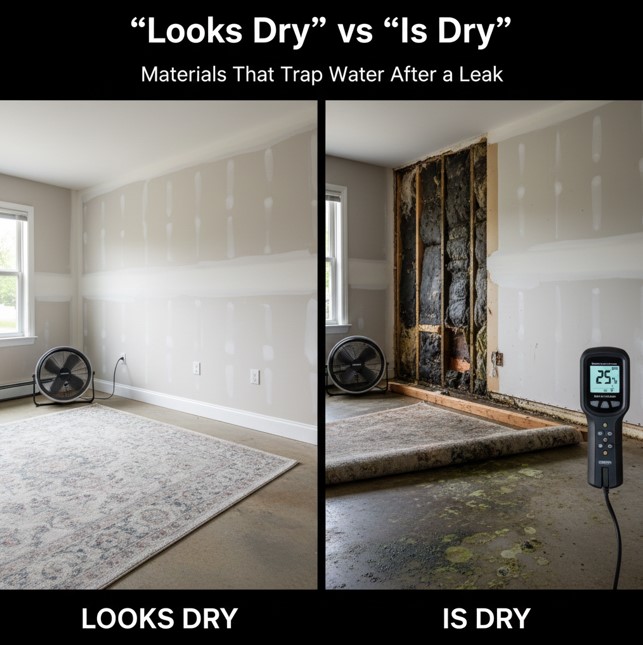
When you see a ceiling stain, your first instinct might be to ignore it or just paint over it. That’s risky business in San Diego’s climate, where unchecked moisture is the root cause of mold and structural problems. Every hour counts: Water-damaged drywall, insulation, or carpet needs to be dried within 24–48 hours to keep mold from taking hold. But your approach will be completely different depending on whether you’re dealing with a roof leak or just condensation.
A roof leak means water is entering from outside—often during winter storms or when Santa Ana winds drive rain sideways. That type of problem can be urgent, requiring fast roof leak detection, drying, and possibly insurance documentation. On the other hand, condensation comes from indoor humidity—a result of showers, cooking, poor ventilation, or even marine layer humidity sneaking into attic spaces. It requires a focus on moisture control, ventilation upgrades, and monitoring relative humidity (RH) with a hygrometer. Misdiagnosing the source can mean wasted money and recurring stains.
Do this now: The moment you notice a stain, grab your phone and take a clear photo. Measure the stained area (width and length), note the date and exact location, and set a calendar reminder to check it again in 24 and 48 hours. This documentation will help you track changes and is useful if you need to notify your landlord, HOA, or insurance company.
Stain Pattern Basics—How Roof Leaks and Condensation Differ
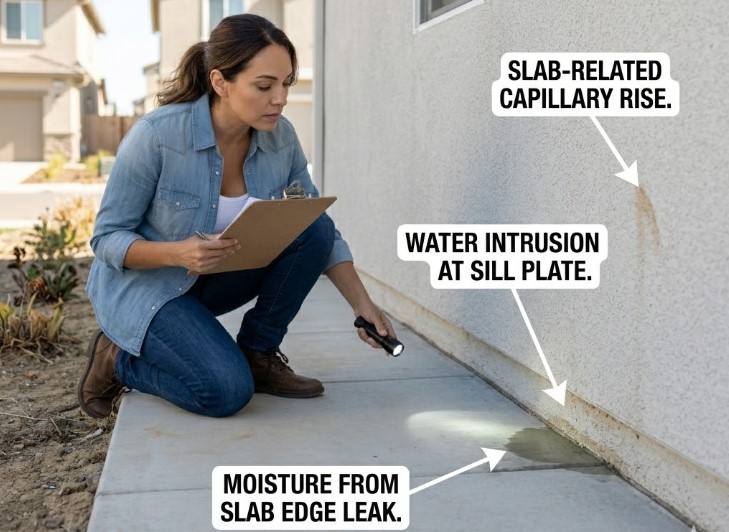
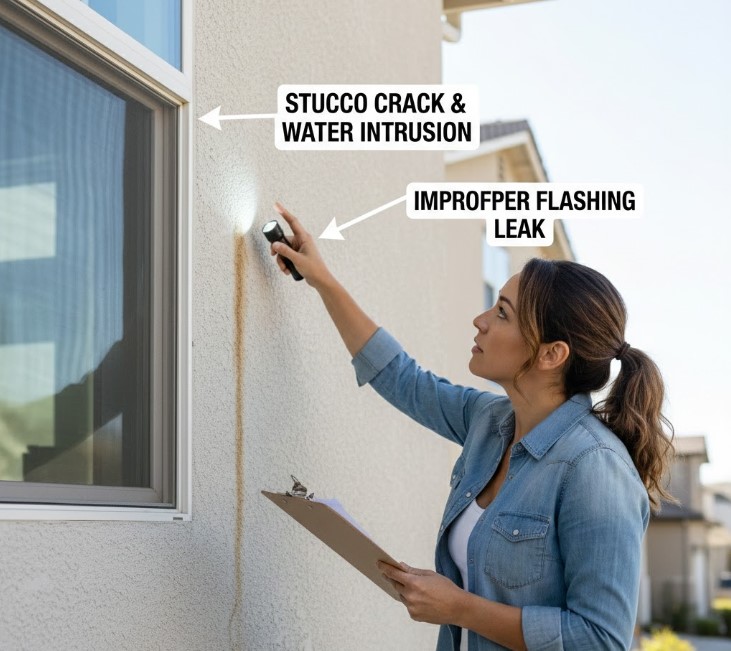
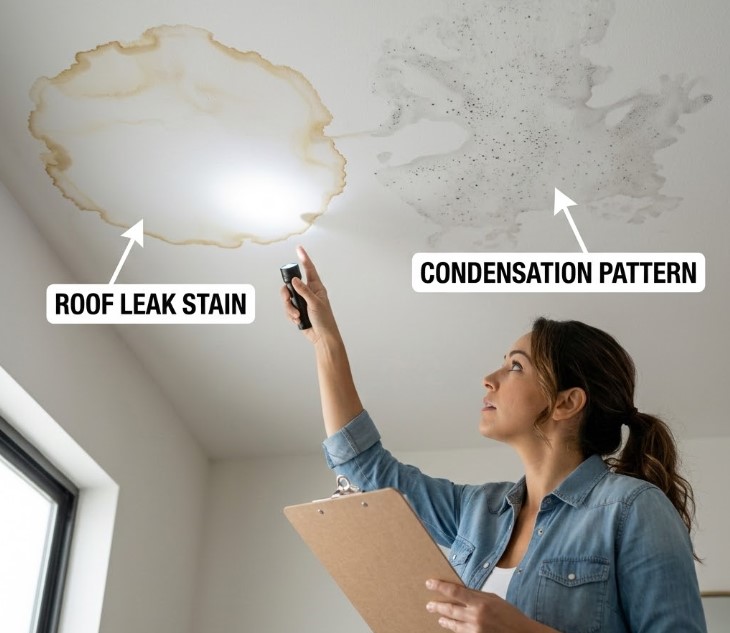
You don’t need to be an expert to start your ceiling water stain identification. Stain patterns offer real clues. Roof leak stains are usually irregular and have sharp, distinct edges. You might see brown or yellow rings (sometimes called “tide lines”), and if you touch the area during or after rain, it may feel damp or even drip water. These stains are often found below roof penetrations—think chimneys, skylights, attic vents, or where the roof meets the wall. In older coastal homes, leaks might show up as classic water rings after a winter storm.
Condensation stains, by contrast, tend to be fuzzier, with blurred edges and a grayish tinge. They show up in high-humidity locations: bathrooms (especially if there’s no exhaust fan or the fan is underpowered), kitchens, laundry rooms, or directly under HVAC ducts. If your San Diego home has sweating AC ducts or you’re seeing condensation on windows during June Gloom, you’re likely dealing with condensation, not a roof leak.
Seasonal context helps too. Roof leaks often show or worsen after rain, while condensation stains can appear after a string of foggy mornings or when the HVAC has been running hard on humid days.
Visual checklist to try now: Is your stain close to a vent, chimney, or skylight? Does it get bigger after rain, or does it show up after you’ve run a hot shower or boiled water? Are you seeing one big stain (leak) or many small, scattered spots (condensation)? Snap a photo and jot down your answers.
Step-by-Step Inspection—Verifying the Source
A systematic inspection will help you get past guesswork. Start with a flashlight and check the area above the stain, if possible. In single-family homes, peek in the attic for wet insulation, water droplets, or signs of active dripping. In condos or apartments, you may need to check from below and note if the stain is on a ceiling shared with a neighbor’s bathroom or kitchen.
Use a hygrometer to check the relative humidity in the stained room. The EPA recommends keeping indoor humidity below 60%, and ideally between 30–50%. Place the hygrometer near the stain—not right under an AC vent—so you get a representative reading. High humidity readings above 60% (especially after showers or cooking) point toward condensation.
A moisture meter is handy for checking whether drywall or wood is actually wet. Press the prongs against the stained area and compare the reading with a dry spot nearby. Elevated moisture readings after rain suggest a leak. If you don’t own a moisture meter, you can learn more about their use and benefits in How to Use a Moisture Meter in Your Home.
Check overhead for HVAC ducts or bath fans. Poorly insulated ducts can “sweat” when warm, humid air meets cold ductwork—a common cause of fuzzy-edged stains during San Diego’s cool, damp spells.
Do this now: Gather your inspection tools: flashlight, hygrometer, moisture meter, and a notepad or your phone. Document what you find above and around the stain, and log RH readings morning and night for two days to spot trends.
What to Do Next—Action Steps for Leaks vs. Condensation
Once you’ve narrowed down the source—roof leak vs condensation—it’s time to act quickly but calmly. Here’s how to handle each scenario:
If you suspect a roof leak:
In the first 24 hours, contain any active drips with a bucket and move valuables out of harm’s way. Ventilate the area with fans and, if safe, open windows. Photograph the stain and any standing water for your records and possible insurance claims. If you see extensive water or suspect the insulation is wet, call a pro for roof leak detection and read this 24-hour water event checklist.
Within 24–48 hours, dry all affected materials—carpet, drywall, wood—using fans and a dehumidifier. If the leak continues after the rain stops, or if the area stays damp despite your efforts, get a roofing contractor involved. Fast action is key for mold prevention: The EPA emphasizes drying all wet materials within 24–48 hours.
If you suspect condensation:
Focus on lowering indoor humidity. Run bathroom exhaust fans for at least 20 minutes after showers (test your fan’s airflow by holding a tissue up to the grille—it should stick). Open windows when weather allows, and consider a dehumidifier for persistent humidity. Insulate exposed pipes or ducts, especially in attics or crawl spaces where cool surfaces meet warm, moist air.
Keep an eye on the stain after weather or humidity changes. If it fades or stops growing, you’re likely on the right track. If it keeps spreading or you see new stains, reassess for hidden leaks or talk to an HVAC specialist about sweating ducts or condensate line clogs.
Safety note: Don’t ignore visible mold, extensive water, or stains that return after drying. Hard-surface mold can sometimes be cleaned with detergent and water, but if you see mold on porous materials (drywall, insulation, carpet), or if there’s a musty odor, it’s time to call a professional for assessment and post-remediation verification.
Ask yourself now: Is the stain bigger than a dinner plate? Has it stayed wet for over 48 hours? Is there visible mold or a persistent musty smell? If you answer yes to any of these, get an expert involved—the cost of waiting can be much higher than a prompt inspection.
Moisture Control for San Diego Homes—Prevention Tips for Coastal and Inland Areas
Preventing future stains is about mastering moisture control San Diego-style. For coastal homes, the marine layer and June Gloom mean you need top-notch attic ventilation—make sure your attic isn’t trapping humidity (see Attic Ventilation Best Practices for Coastal Homes). Upgrading bath fans (look for models rated at 70–110 CFM for most bathrooms) and running range hoods or dryer vents to the outdoors are smart investments.
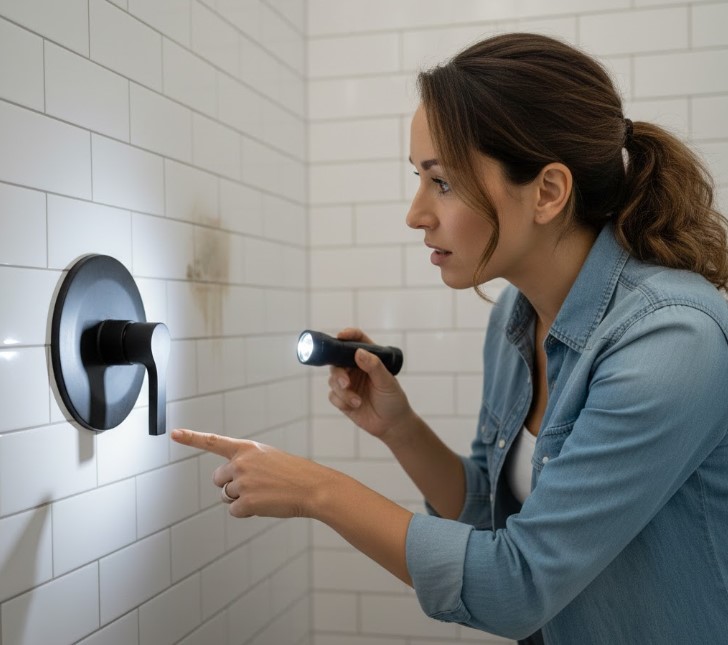
Inland homes should prioritize regular roof inspections—especially before summer storms and after high-wind events. Check for cracked tiles, missing shingles, or gaps at roof penetrations. Even a small under-sink leak or a shower valve leak behind the wall can lead to hidden mold if left unchecked.
Condos and apartment dwellers often need to work with HOAs or property managers, especially if stains appear on shared walls or ceilings. Document any findings, report early, and ask about building-wide HVAC or roof maintenance schedules. Use a rental moisture checklist to track any changes.
Do this now: Take the 7-day RH logging challenge. Place a hygrometer in your bathroom or near the stained area (not in direct sunlight, and not right above a vent). Log readings morning and night for a week. Note spikes after showers, cooking, or on foggy mornings. If you consistently see RH above 60%, consider a dehumidifier or ventilation upgrade.
FAQ
How can I tell the difference between a roof leak and condensation stain in my ceiling?
Check the stain’s shape, location, and timing. Roof leaks make irregular, sharp-edged stains (often brown/yellow rings) that worsen after rain. Condensation stains are fuzzy, grayish, and cluster in high-humidity areas or under ducts, often appearing after showers or foggy spells.
What should I do in the first 24 hours after finding a water stain?
Photograph the stain, measure it, and note the date/location. Contain any active water, move valuables, ventilate the area, and start drying materials. Track changes over the next 24–48 hours and review this first 24-hour water event checklist.
Can condensation cause mold, or is it only a problem with leaks?
Yes, both leaks and condensation can lead to mold if wet materials stay damp for over 24–48 hours. Keeping indoor humidity below 60% (ideally 30–50%) and drying surfaces quickly are the best mold prevention tips.
Is it safe to clean a stained area myself, or do I need a professional?
For small stains (less than a dinner plate) with no visible mold or persistent wetness, DIY cleaning with detergent and water is usually safe. For larger, moldy, or persistent stains, call a pro—especially if the area is porous (drywall, carpet, insulation).
How does San Diego’s climate affect moisture and condensation problems?
Coastal areas face more condensation from marine layers and fog; inland homes see more leaks from sudden storms or HVAC condensation. Seasonal changes, like June Gloom, can drive up indoor RH and increase condensation risk.
What tools do I need to check for hidden moisture?
A flashlight, hygrometer, and moisture meter are your best friends. The hygrometer helps you keep indoor humidity in check, while a moisture meter detects hidden wet spots. Learn more in our moisture meter guide.
Should renters or condo owners handle ceiling stains differently?
Yes—renters should document (photos, measurements) and notify the landlord promptly. Condo owners may need to work with the HOA for repairs affecting shared elements. Always document and communicate early.
What are the first signs of a serious moisture problem in a home?
Persistent stains, musty odors, visible mold, or repeated condensation on windows and walls are red flags. If the stained area stays wet over 48 hours or keeps growing, call a professional for moisture assessment and remediation advice.
Ready to take control?
Use the 10-minute inspection checklist to document your stain pattern and location today. Start tracking relative humidity in the affected room for 7 days—log trends and look for spikes after showers, cooking, or foggy mornings. If you find red flags like a large area, visible mold, or persistent wetness, don’t wait—schedule a professional inspection. For more on moisture control San Diego-style, check out our Moisture Control Guide and related resources. Taking quick, informed action now keeps your home dry, safe, and mold-free.