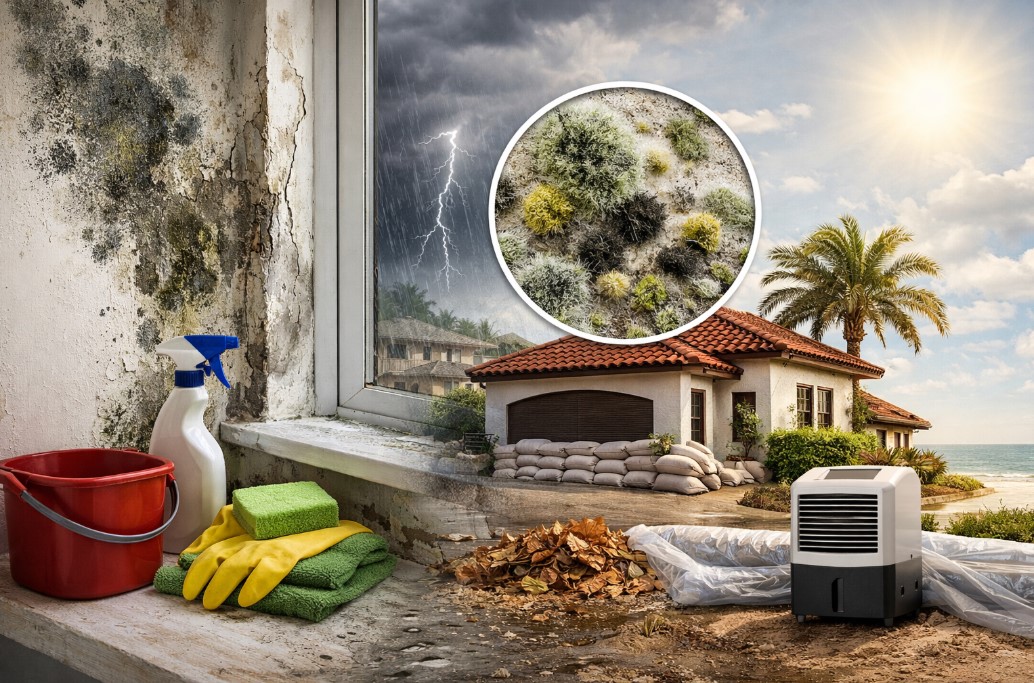
San Diego doesn’t have one mold season — it has two. The first peaks November through March during the rainy season, when bulk water intrusion drives moisture into walls and foundations. The second peaks June through August, when the marine layer traps humidity indoors without a single drop of rain falling.
Quick Answer
- Two peak risk periods: rainy season (Nov–Mar) and marine layer season (Jun–Aug)
- Main triggers: bulk water intrusion in winter, trapped coastal humidity in summer
- Coastal neighborhoods (La Jolla, Ocean Beach, Carlsbad) face elevated year-round risk from salt air and fog
- Mold can start growing within 24–48 hours if wet materials aren’t dried fast — per IICRC S520 remediation standard
- Indoor RH above 60% sustained for several days significantly raises risk — the EPA recommends keeping RH between 30–50%
- Two prep windows: October (before rain) and May (before June Gloom) are your best prevention checkpoints
Why San Diego’s Climate Creates Year-Round Mold Risk
Most homeowners assume mold is a “wet climate problem.” San Diego proves otherwise. The Mediterranean climate here means warm, dry summers interrupted by marine layer mornings, and mild wet winters where drainage problems go unnoticed until damage is done.
The marine layer — that coastal fog that rolls in overnight and burns off by noon — carries real humidity load. On a June morning in Ocean Beach, outdoor relative humidity can sit above 85% for hours. When that air drifts into a home through vents, gaps, or open windows, it contacts cooler wall surfaces and condenses. You don’t see water. But drywall, wood framing, and insulation are absorbing it.
And here’s where it gets interesting: the problem compounds in homes that rely on “nice weather ventilation.” Opening windows on a foggy morning to “air out” the house can actually increase indoor moisture. It’s counterintuitive, and it catches a lot of San Diego homeowners off guard.
The Two Peak Periods: A Month-by-Month Picture

November–March: Rainy Season Risk
This is when bulk water intrusion does the most damage. According to NOAA climate data for San Diego, the region averages 10–12 inches of rain annually — and most of it falls between November and March. That doesn’t sound like much, but concentrated rainfall on homes with poor drainage, aging stucco, cracked window flashing, or flat roof sections is enough to drive moisture into assemblies that stay wet for weeks.
The biggest risks during this window:
- Roof and flashing failures — small cracks that held up during a dry summer suddenly leak under sustained rain
- Foundation and slab perimeter — water pools against the house in poorly graded yards
- Window and door frames — especially in stucco construction, where caulk shrinks seasonally
- Under-sink and cabinet flooding — from supply line surges and P-trap pressure changes
What makes winter damage worse is how long materials stay wet. In San Diego’s mild temperatures, evaporation happens, but drywall and subfloor don’t dry the same way they might in a hot dry climate. If a wall cavity gets wet in December, it can support mold growth through February before anyone notices.
June–August: Marine Layer Season
This is San Diego’s hidden mold window. Temperatures are warm, there’s no rain — but “June Gloom” brings marine layer fog that keeps outdoor RH elevated from midnight until late morning, sometimes pushing past 85–90% in coastal zip codes.
Indoors, this creates a moisture cycle:
- Overnight marine layer raises outdoor humidity
- Morning ventilation habits pull that humid air inside
- Warm afternoon air drives moisture into wall assemblies when windows close
- Repeat daily for weeks
Mold thrives at temperatures between 77–86°F — exactly where San Diego homes sit in summer, especially rooms without AC. Add sustained humidity from the marine layer and you have ideal growing conditions even with no visible water source.
Neighborhoods at highest risk during this period include Ocean Beach, Pacific Beach, La Jolla, Del Mar, and Carlsbad — all within the main marine layer corridor.
Coastal vs. Inland: How Risk Differs by Neighborhood
The risk profile changes significantly depending on where in San Diego County you live.
| Zone | Primary Risk Period | Main Trigger | Key Areas |
|---|---|---|---|
| Coastal (0–3 miles from ocean) | Year-round, peaks Jun–Aug | Marine layer humidity, salt air | Ocean Beach, La Jolla, Del Mar, Carlsbad |
| Mid-city / hillside | Nov–Mar | Drainage, slope runoff, stucco leaks | Normal Heights, University Heights, Kensington |
| Inland valleys | Aug–Sep | Monsoonal moisture + heat | Escondido, El Cajon, Santee, Poway |
| Canyons/brushfire interface | Oct–Nov | Ash and humidity post-wildfire | Tierrasanta, Scripps Ranch, Rancho Bernardo |
Coastal homeowners deal with something inland residents don’t: salt air accelerates corrosion on metal window frames, vents, and HVAC components. When those surfaces corrode, gaps form — and those gaps become moisture entry points year-round. It’s a slow process, but worth factoring into your inspection routine.
Inland valleys face a different pattern. Monsoonal moisture from late summer combined with heat and poor attic ventilation creates conditions where attic mold can develop quickly — sometimes within a single humid week in August.
What Actually Triggers Mold: The Conditions That Matter
Mold needs three things: a food source (any organic material — drywall, wood, dust), temperature above roughly 40°F, and moisture. In San Diego, temperature is almost never the limiting factor. Moisture is the only variable you can realistically control.
Two mechanisms drive indoor moisture in San Diego homes:
Bulk water intrusion — actual water getting into the structure from leaks, rain, or plumbing failures. This is detectable with inspection. Once inside a wall or under flooring, it stays wet far longer than most people expect. As the EPA’s guide on mold and moisture makes clear, killing mold without fixing the moisture source leads to regrowth — the source always has to be addressed first. A monthly leak walkthrough covering sinks, toilets, and ceiling stains is the single most effective prevention habit.
Vapor and condensation — moisture from air contacting cooler surfaces and condensing. Harder to see, happens gradually, and tends to accumulate in wall assemblies, closet corners, and behind furniture on exterior walls. This is the marine layer mechanism.
The critical factor is drying time. Per the IICRC S520 standard, mold spores can begin colonizing wet organic material within 24–48 hours under ideal conditions. The goal isn’t to keep things perfectly dry forever — it’s to prevent sustained wetness.
What Official Sources Say About Indoor Mold and Humidity
The EPA, CDC, and California Department of Public Health have published guidance relevant to San Diego homeowners. Key points:
- The EPA recommends keeping indoor relative humidity between 30–50% to reduce mold risk; sustained levels above 60% are considered elevated risk conditions
- No federal or California standard defines a “safe” level of indoor mold — per EPA guidance, the recommendation is to remediate visible mold and fix the moisture source regardless of species
- The CDC notes that people with asthma, respiratory conditions, or compromised immune systems face higher health risk from mold exposure
- The California Department of Public Health provides state-level guidance on indoor mold, including renter and landlord responsibilities specific to California
- The IICRC S520 remediation standard recommends beginning drying within 24–48 hours after any water intrusion event to prevent mold colonization
Pre-Season Preparation: Two Checkpoints Per Year
October Prep (Before Rainy Season)
Do this in the first two weeks of October, before the first significant rain event.
- Roof and gutters: clear debris, check flashing around chimneys, skylights, HVAC penetrations
- Window and door caulk: inspect stucco and frame seams; recaulk anything that has cracked or shrunk
- Yard drainage: confirm water flows away from the foundation; regrade low spots if needed
- Under-sink cabinets: inspect supply lines, P-trap connections, cabinet floor for soft spots — see our guide on under-sink leaks
- Attic: check insulation for compression or discoloration near eaves and ridge vent — signs of prior moisture intrusion covered in our attic moisture guide
May Prep (Before Marine Layer Season)
Do this before June Gloom sets in.
- Exhaust fans: test airflow in bathrooms and kitchen; clean grills, verify the duct exhausts outside (not into attic)
- Hygrometer baseline: place in 2–3 rooms and log morning RH for a week — this is your seasonal baseline; our hygrometer placement guide walks through exactly where and how
- Closets on exterior walls: check corners and baseboards for discoloration or musty smell; common coastal issue detailed in our closet mold guide
- HVAC: inspect condensate drain line, check air handler for moisture near the unit
- Ventilation strategy: decide in advance when you’ll use exhaust fans vs. keep windows closed on foggy mornings
Signs You’re in an Active Risk Period Right Now
These aren’t signs of existing mold — they’re signals that conditions are favorable for growth and you should act:
- Morning RH above 65% indoors three or more consecutive days
- Condensation on windows in the same room every morning
- Musty smell that fades by afternoon — overnight moisture is accumulating and partially evaporating by day
- Fog visible outside but air feels “thick” indoors — marine layer penetration
- Recent rain + any ceiling stain or soft baseboard — treat as active water intrusion until confirmed otherwise
Cross-reference what’s common in your specific area using our condensation map for San Diego homes.
About This Guide
This article references guidance from the U.S. Environmental Protection Agency, the CDC, the California Department of Public Health, and the IICRC S520 remediation standard. Climate data is based on NOAA records for San Diego County. This content is for educational purposes only and does not constitute professional inspection, remediation, or medical advice. If you have health concerns related to mold exposure, consult a licensed medical professional. For water intrusion events or visible mold growth, a professional assessment is recommended.
FAQ
Does San Diego have a mold season?
San Diego has two peak mold risk periods rather than a single defined season: November through March (rainy season) and June through August (marine layer season). Both create indoor moisture conditions that support mold growth through different mechanisms.
Is the marine layer enough to cause mold indoors?
Yes, under the right conditions. If coastal fog raises indoor RH above 60% for several consecutive days and materials don’t dry between cycles, mold can colonize drywall, wood framing, and insulation even with no visible water source.
Which San Diego neighborhoods have the highest mold risk?
Coastal neighborhoods within a few miles of the ocean — including Ocean Beach, Pacific Beach, La Jolla, Del Mar, and Carlsbad — face the highest year-round risk. Inland areas like Escondido and El Cajon see higher risk during monsoonal late summer.
How fast does mold grow after a water event?
Per the IICRC S520 standard, mold spores can begin colonizing wet organic materials within 24–48 hours under favorable conditions. The first 48 hours after any water intrusion are the most critical drying window.
Should I open windows during June Gloom for ventilation?
Not on foggy mornings in coastal areas. If outdoor humidity is higher than indoor humidity, opening windows increases your moisture load. Track indoor RH with a hygrometer and ventilate when outdoor air is drier — typically dry, sunny afternoons.
What humidity level should I maintain indoors in San Diego?
The EPA recommends 30–50% RH as the target range. In San Diego near the coast, aim to keep indoor RH below 55% consistently. Levels above 60% sustained over multiple days meaningfully increase risk.
Can I prevent mold without calling a professional?
For moisture control and prevention, yes — routine inspections, proper ventilation, and fast response to leaks are effective DIY strategies. If visible mold covers more than 10 square feet, keeps returning after cleaning, or follows a significant water intrusion event, the EPA recommends professional assessment.
What’s the single most effective thing I can do before rainy season?
Check your roof flashing, window caulk, and gutter drainage — all of which control bulk water entry. Most rainy season mold problems trace back to a small chronic entry point that was dormant during the dry season. Spending 30 minutes in October identifying those points prevents weeks of remediation later.
Ready to build your pre-season routine? Start with the 10-minute monthly leak walkthrough — it covers the most common San Diego entry points and takes less time than it sounds.